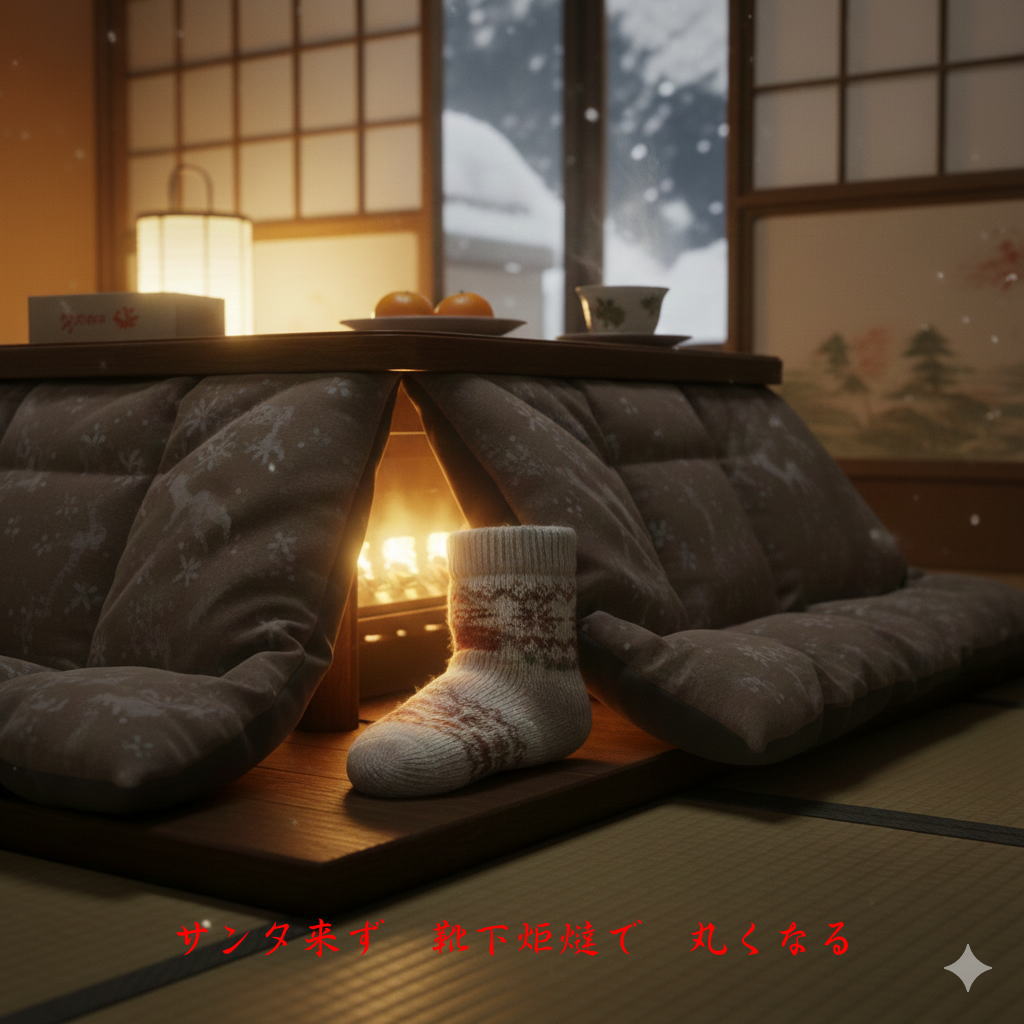
サンタ来ず 靴下炬燵で 丸くなる Santa never came— the empty sock curls up warm in the kotatsu.

 もう間もなくクリスマスです。大阪の北や南の繁華街はクリスマス一色です。

 クリスマスの歴史をたどれば、単なる宗教行事にとどまらず、古代の自然信仰や商慣習が複雑に絡み合って形成されてきたことが分かります。

 実は、聖書にはイエス・キリストが「12月25日に生まれた」という記述はありません。ではなぜこの日が「クリスマス」になったのでしょうか?

 古代ローマでは、冬至(一年で最も日が短い日)の時期に、太陽の再誕を祝う「不滅の太陽の誕生日」や「サトゥルナリア祭(農耕神のお祭り)」が行われていました。
 4世紀頃、キリスト教を広める過程で、すでに定着していたこれらのお祭りにキリストの誕生を祝う意味を重ね合わせ、12月25日を「降誕祭」(クリスマス)として定めたと言われています。

 今では、世界(主にキリスト教圏)と日本では、クリスマスの「過ごし方」や「主役」に面白い違いがあります。

  キリスト教徒にとっては、神の子が人間として地上に降り立った(受肉)ことを祝う、愛と救いの記念日(ミサと祈りに日)です。
 その日は、「家族と家でゆっくり過ごす」、「当日は休業する店が多く、街は静か」、「七面鳥、ローストビーフ、家庭料理」といった、どちらかと言えば、日本の「お正月」に近い神聖な日です。

 一方、日本のクリスマスは、世俗的な色合いが強く、宗教を問わず、家族や友人(恋人)と絆を深め、平和を願う「冬の風物詩」としての役割が強いのが特徴です。
 日本全国津津浦々、内も外もクリスマスツリーとイルミネーションで飾られ、お店はかき入れ時とばかりに町じゅうは賑わい、特にフライドチキン、ショートケーキは飛ぶように売れます。
 ちなみに、日本で「クリスマスにはフライドチキン」と言われるように、フライドチキンを食べる習慣が根付いたのは1970年代に、『ケンタッキーフライドチキン(KFC)』のマーケティングがきっかけと言われています。また、イチゴのショートケーキが定番なのも、『不二家』の創業者が広めた日本独自の文化です。

 つまり、日本のクリスマスは、1549年、フランシスコ・ザビエルによりキリスト教とともに紹介されて以来、「外来文化の受容 → 日本的再解釈 → 独自文化の創造」という、日本文化の典型的な変容プロセスを体現しています。

Christmas is just around the corner. The bustling districts of northern and southern Osaka are completely wrapped in the colors of the season. 

Tracing the history of Christmas reveals that it is far more than a simple religious event; it has been shaped through a complex intertwining of ancient nature worship and commercial customs. 

In fact, the Bible contains no description stating that Jesus Christ was born on December 25. So why did this date become “Christmas”?

In ancient Rome, around the time of the winter solstice—the shortest day of the year—festivals such as the *Dies Natalis Solis Invicti* (“Birthday of the Unconquered Sun”) celebrating the sun’s rebirth, and the Saturnalia festival honoring the god of agriculture, were held. 

Around the 4th century, as Christianity spread, these already‑established festivals were overlaid with the meaning of celebrating Christ’s birth, and December 25 came to be designated as the Feast of the Nativity—Christmas.

Today, there are interesting differences between how Christmas is spent, and who its “main characters” are, in the Christian world and in Japan. 

For Christians, it is a sacred day commemorating the incarnation—the moment when the Son of God descended to earth as a human being. It is a day of love and salvation, marked by Mass and prayer. 
People spend the day quietly at home with family; many shops close, the streets grow calm, and meals such as turkey, roast beef, and home‑cooked dishes are enjoyed. In this sense, it resembles the Japanese New Year more than a festive party.

By contrast, Christmas in Japan has a strongly secular character. Regardless of religion, it serves as a winter tradition that deepens bonds among family, friends, and couples, and expresses hopes for peace. 
Across the country, homes and public spaces alike are decorated with Christmas trees and illuminations. Towns bustle as shops enter their busiest season, and fried chicken and shortcake sell at remarkable speed.

Interestingly, the custom of eating fried chicken at Christmas in Japan took root in the 1970s, sparked by marketing from Kentucky Fried Chicken (KFC). The popularity of strawberry shortcake as a Christmas staple is also a uniquely Japanese tradition, spread by the founder of Fujiya.

In short, since Christmas was introduced to Japan in 1549 by Francis Xavier along with Christianity, it has embodied a quintessential pattern of Japanese cultural transformation: **the acceptance of foreign culture → its reinterpretation through a Japanese lens → the creation of a unique tradition.**
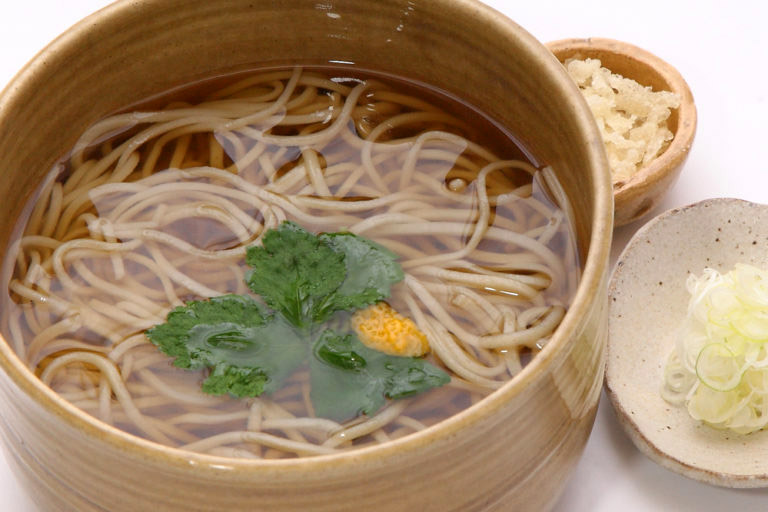
新そばの 香り感じる うれしさよ Scent of fresh soba— the delight of sensing its fragrance.

「新そば」の季節ですね!あの独特の清涼感のある香りと、淡い緑がかった色味を目にすると、冬の訪れを感じてワクワクしてしまいます。

 先日も、行きつけのお蕎麦屋さんから「新そば」のお誘いを受けていましたのでお呼ばれに行きました。
 お店に入った途端、いつもとは違った香りが漂っています。これぞ「新そば」の香りです。
 もうこの歳になると、体のあちらこちらがいうことが聞きません。五感も同じです。でも、こうして「新そば」の香りを感じることができてうれしくなります。

 一般的に新そばといえば、秋に収穫される「秋そば」(10月〜11月頃)を指しますが、実は夏に収穫される「夏そば」(7月〜8月頃)も新そばと呼ばれます。

 「秋そば」は香りが非常に強く、味わいが濃厚。「そば好きの本番」はこちらですね。

 「夏そば」は 香りは控えめですが、非常に瑞々しく、喉越しが爽やかです。

 打ち立ての新そばが少し緑がかって見えるのは、実が完熟しきる直前の「青実」が混ざった状態で収穫するからです。このクロロフィル(葉緑素)が含まれている状態が、あの爽やかな香りの正体。時間が経つと酸化して茶色くなってしまうため、緑色であることは「鮮度の証」でもあります。

 江戸時代、江戸っ子たちは「初物(はつもの)」を食べることを粋としていました。「初物を食べれば寿命が75日延びる」と信じられていたため、新そばが出回るとこぞって蕎麦屋へ駆け込んだそうです。
 ちなみに、江戸時代は現代ほど保存技術が良くなかったため、秋の新そばが出る前の時期の蕎麦はかなり味が落ちていたと言われています。だからこそ、新そばの感動は今よりもずっと大きかったのでしょうね。

 本当に新そばの香りを堪能したいなら、まずは「何もつけずにそのまま」、次に「水だけ」で食べる「水そば」が通の楽しみ方です。
 つゆ(醤油や出汁)の強い味に邪魔されず、蕎麦本来の甘みと、鼻から抜ける野性味のある香りをダイレクトに感じることができます。
 
 
これは少し意外な植物学的うんちくなのですが、ソバは米や麦のような「イネ科」ではなく、タデ科の植物です。そのため、分類上は「穀物」ではなく「擬穀類(ぎこくるい)」と呼ばれます。だからこそ、イネ科にはない独特のアミノ酸バランスやルチンといった栄養素が豊富なんですよ。

2011年12月8日投稿の「新そばー朽木の里ー」もご覧ください。


It’s the season of shin-soba (new buckwheat noodles)! Whenever I see that unique refreshing aroma and the faint greenish hue, I can’t help but feel excited for the arrival of winter.

The other day, my favorite soba restaurant invited me to enjoy their shin-soba, so I gladly went. The moment I stepped inside, a fragrance different from usual filled the air. This is the unmistakable scent of shin-soba. At my age, my body doesn’t always do what I want, and the same goes for my senses. But being able to experience the aroma of shin-soba like this makes me truly happy.

Generally speaking, shin-soba refers to “autumn soba,” harvested around October to November. But in fact, “summer soba,” harvested around July to August, is also called shin-soba.

Autumn soba has a very strong fragrance and a rich flavor—it’s the true highlight for soba lovers.
Summer soba, on the other hand, has a milder aroma but is wonderfully fresh, with a refreshing smoothness down the throat.

Freshly made shin-soba often appears slightly greenish because it is harvested when some of the grains are still “green seeds,” just before full ripening. The chlorophyll present at that stage is the source of that refreshing aroma. Over time, it oxidizes and turns brown, so the green color is also proof of freshness.

In the Edo period, townspeople considered eating “first-of-the-season foods” (hatsumono) stylish. It was believed that eating them would extend one’s life by 75 days. So when shin-soba appeared, people would rush to the soba shops. Incidentally, because preservation techniques were not as advanced as they are today, soba available before the autumn harvest was said to taste quite poor. That’s why the excitement over shin-soba back then must have been even greater than it is now.

If you truly want to savor the aroma of shin-soba, the connoisseur’s way is first to eat it plain, with nothing added, and then to try “mizu-soba,” eaten only with water. This way, the strong flavors of dipping sauce (soy sauce or broth) don’t interfere, and you can directly enjoy the natural sweetness of soba and its wild aroma that rises through the nose.

Here’s a slightly surprising botanical fact: soba is not a member of the grass family like rice or wheat, but belongs to the knotweed family. Therefore, it is not classified as a “grain” but as a “pseudo-cereal.” That’s why it is rich in unique nutrients such as a distinctive amino acid balance and rutin, which are not found in true cereals.

Please also take a look at the post from December 8, 2011: Shin-soba — The Village of Kutsuki.