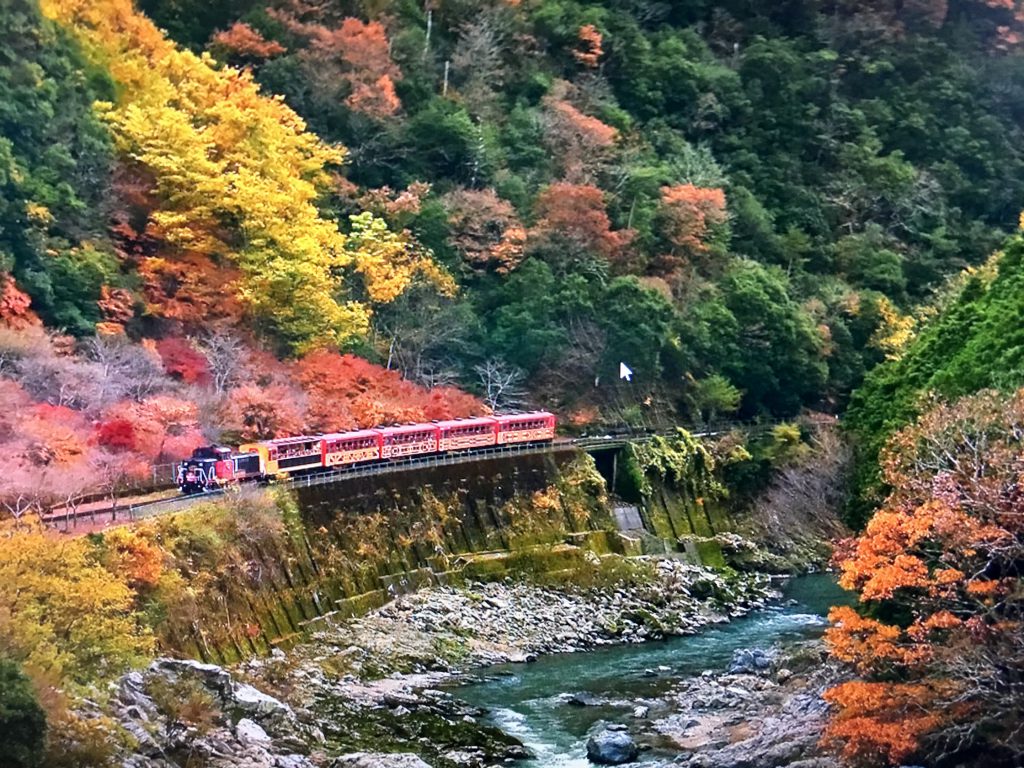
保津峡を 紅葉かき分け トロッコ列車

The “Sagano Torokko Train” runs along the Hozu River, upstream of the Oigawa River, which spans the Togetsukyo Bridge in Arashiyama, Kyoto.  The “Torokko Train” is an art-deco-style 5-car train that is pulled by a diesel locomotive. It takes 25 minutes to travel 7.3km one way from Torokko Saga Station to Torokko Arashiyama Station to Torokko Hozukyo Station to Torokko Kameoka Station, running through the Hozukyo Gorge.  Only one passenger car is connected to the open vehicle “The Rich” without window glass, and you can enjoy a large panorama of Hozu Gorge.  You can enjoy the scenery of the Hozu Gorge in each season, with cherry blossoms in spring, fresh green in summer, colored leaves in autumn, and snowy scenery in winter, but autumn leaves are the best choice.

京都嵐山の渡月橋がかかる大堰川(おおいがわ)の上流、保津川に沿って走るのが「嵯峨野トロッコ列車」です。「トロッコ列車」は、ディーゼル機関車に引かれるアールデコ調の5両編成の客車で、トロッコ嵯峨駅~トロッコ嵐山駅~トロッコ保津峡駅~トロッコ亀岡駅までの片道7.3kmの距離を25分間かけて、保津峡を走り抜けます。客車には1両だけ窓ガラスのないオープン車両「ザ・リッチ号」が連結されていて、保津峡の大パノラマが楽しめます。春は桜、夏は新緑、秋は紅葉、冬は雪景色と、四季折々の保津峡の景色が楽しめますが、やはり一押しは秋の紅葉です。
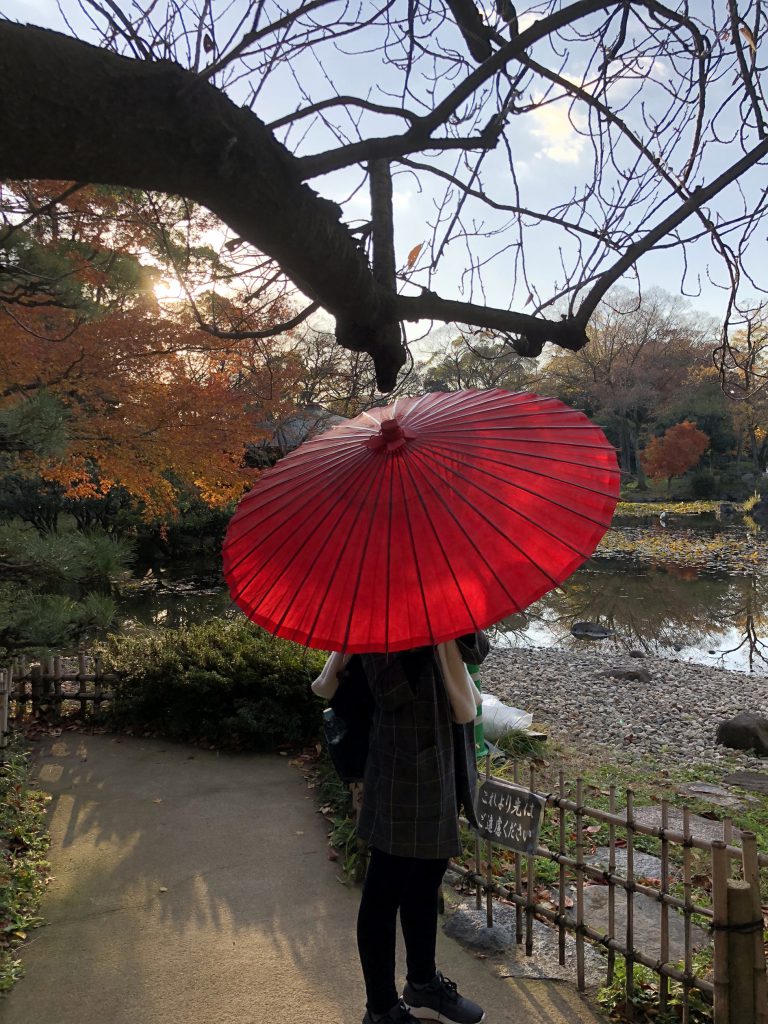
女ひとり 赤い番傘 もみじ園

Tennoji Park is located in Tennoji Ward, Osaka.  “Abeno Harukas” rises over diagonally opposite.  There are museums and zoos in the park, and everyone in Osaka knows about it.  There is a famous garden called “Keitakuen” in the park.  It was designed and constructed by Ogawa Jihei, who worked on large-scale gardens such as Saionji Kinmochi’s residence in Tokyo, Heian Jingu and Maruyama Park in Kyoto from the middle of the Meiji era to the early Showa era.  A large pond is placed in the center, an artificial hill is built, and stepping stones and bridges are surrounded around it, and the method of Sawatari is used, which makes you feel the dynamic movement of water under your feet.  There is a stylish tea room called “Chosei-an” near the pond. The Sumitomo family, a wealthy merchant in Osaka, donated to Osaka City.

大阪の天王寺区に天王寺公園があります。斜向かいに「あべのハルカス」が聳え立っています。公園内には美術館や動物園があり、大阪の人なら知らない人はいません。その公園内に「慶沢園」と言う名園があります。明治中期から昭和初期にかけて東京の西園寺公望邸や京都の平安神宮、円山公園など大規模な庭園を手掛けた小川治兵衛が設計・施工しました。中央部に大きな池を配置し、築山を築き、その周辺には飛石や橋をめぐらせ、躍動する水の動きを足下に感じさせてくれる沢渡り(さわたり)の手法が用いられています。池のそばには「長生庵」と言う瀟洒な茶室があります。大阪の豪商、住友家が大阪市に寄付しました。

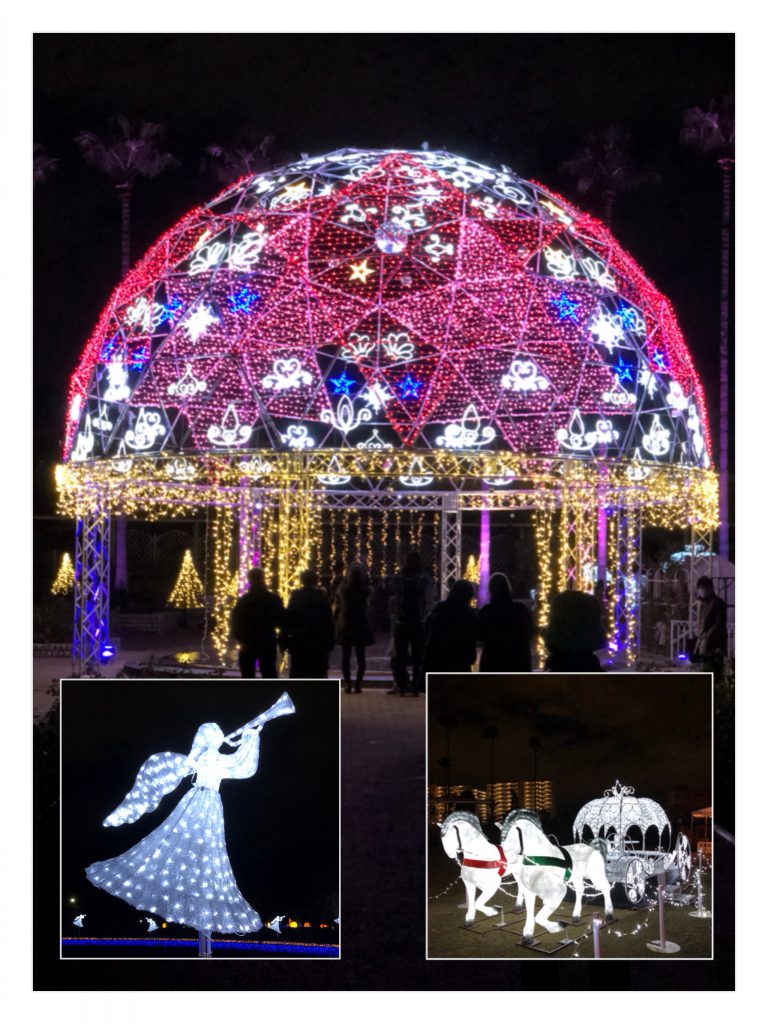
コロナにも 負けぬ希望を イルミネーション

In the clear air, the fantastic illuminations have spread all over the country and have become an annual winter event.  At first, Christmas trees were decorated with miniature bulbs and wheat bulbs , but in recent years, light emitting diodes with high output, low power consumption, and excellent durability and heat generation have become cheaper, which is also a cause of the spread.  Due to the rise of blue and white light emitting diodes and their overwhelming expressiveness, they are often used for illumination.  In addition to urban illuminations, the number of homes where individuals can enjoy decorating indoors and outdoors with illuminations has increased.  However, each illumination contributes to power saving, but if it spreads nationwide, its power consumption will become enormous, and it is becoming a problem from the viewpoint of reducing carbon dioxide emissions.

澄んだ空気の中、幻想的なイルミネーションは、今や全国各地に広がり、冬恒例の行事になりました。最初はクリスマスツリーに豆電球やムギ球で飾ったものでしたが、近年、高出力で消費電力も少なく、耐久性や発熱面でも優れた発光ダイオードが安価になったと言う事も広がりの原因になった様です。青色発光ダイオードや白色発光ダイオードの台頭や、その圧倒的な表現力により、イルミネーションには多用されています。都市イルミネーションだけでなく、個人でも室内外をイルミネーションで飾って楽しむ家庭が増えました。ただ、一つひとつのイルミネーションは省電力に寄与しますが、これだけ全国的にも広がると、その消費電力は莫大になり、二酸化炭素排出削減の観点から、問題になりつつあります。

人は皆 紅葉にうつつ されど薔薇

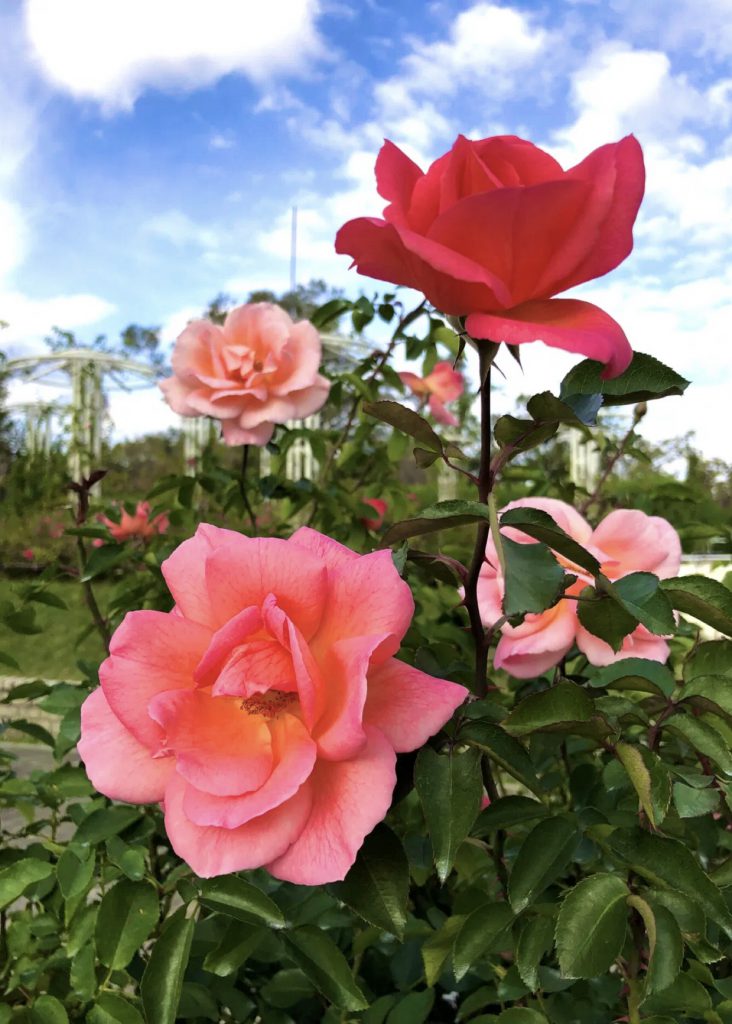
According to this week’s weekly forecast for Osaka, there are no days when the maximum temperature exceeds 20 ° C.  The minimum temperature is all below 10 ° C.  However, this November, we observed “summer day” in Toyama City for 3 consecutive days and in Nara City and Tokushima City for 2 consecutive days, and 25.5 ° C in Nagano City was the latest “summer day” since the start of statistics.  Record warmth that I couldn’t think of in November continued in various places.  Japan is no longer in the temperate zone, but in the subtropical climate category.  Roses are still in bloom in the rose garden in the nearby park.  The trees on the hills in the same park are completely colored in autumn colors, and this imbalance is strange.  In the haiku here, I wrote about the remaining roses at the beginning of November, but even though it’s already December, it’s the momentum of spring roses, not the rest.

大阪の今週の週間予報では、さすがに最高気温も20°Cを超える日はありません。最低気温もすべて10°C以下です。しかしこの11月は、富山市で3日連続、奈良市や徳島市で2日連続夏日を観測し、長野市の25.5℃は統計開始以来、最も遅い夏日となるなど、各地で11月とは思えない記録的な暖かさが続きました。もう日本は温帯ではなく、亜熱帯の気候区分に入った状況です。近くの公園のバラ園も未だにバラが元気に咲いています。同じ園内の高台にある木々はすっかり紅葉していて、このアンバランスが何とも奇妙です。ここの俳句でも11月の始めに残りバラを詠いましたが、もう12月だと言うのに残りバラどころではありません。春バラの勢いです。

湯豆腐も 楽しみひとつ 南禅寺

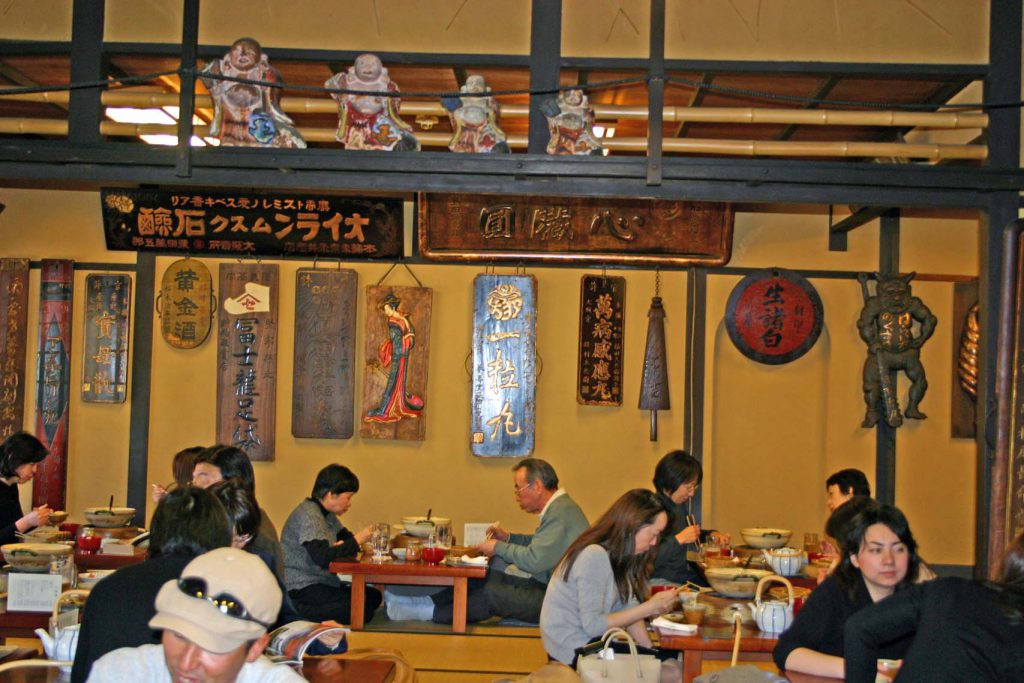
As autumn deepens and I start to feel the arrival of winter, I will want to visit Kyoto.  The purpose is Yudofu.  Starting with Kiyamachi-dori, which is sandwiched between the Kamo and Takase rivers that flow through central Kyoto, there are Yudofu shops everywhere, from Higashiyama, Kitayama, and Sagano in the west, to the deep mountains surrounding it.  Yudofu is said to have originated from the devoted cuisine of Nanzenji Temple in Kyoto, and is said to be a food that has spread throughout Kyoto from Nanzenji Temple.  When Yudofu was born in Nanzenji, it used yaki-dofu, which was different from the current Yudofu in Kyoto.  Yudofu is a food with a long history, but as it spread throughout Kyoto, it gradually became a style similar to the current Yudofu.  It is now popular with foreigners visiting Japan, and there are even foreigners who order “Yu-tohu”.

秋も深まり、冬の訪れを感じ始めると、訪ねたくなるのが京都。目的は湯豆腐です。京都中心部を流れる鴨川と高瀬川に挟まれた木屋町通りを始め、東山、北山、そして西の嵯峨野と、街中からそれを囲む山深い所まで、至る所に湯豆腐店があります。湯豆腐は京都の南禅寺の精進料理が起源と伝えられていて、南禅寺から京都全体に広まった食べ物と言われています。南禅寺で生まれた時の湯豆腐というのは焼き豆腐を使用していて今現在の京都の湯豆腐とは違っていました。湯豆腐は歴史がある食べ物なのですが、京都全体に広まるにつれて、だんだんと今の湯豆腐のようなスタイルになっていきました。今では日本を訪れる外国人にも人気があり、「Yu-tohu」と注文する通も沢山います。

山茶花が 咲いて華やぐ 森の中

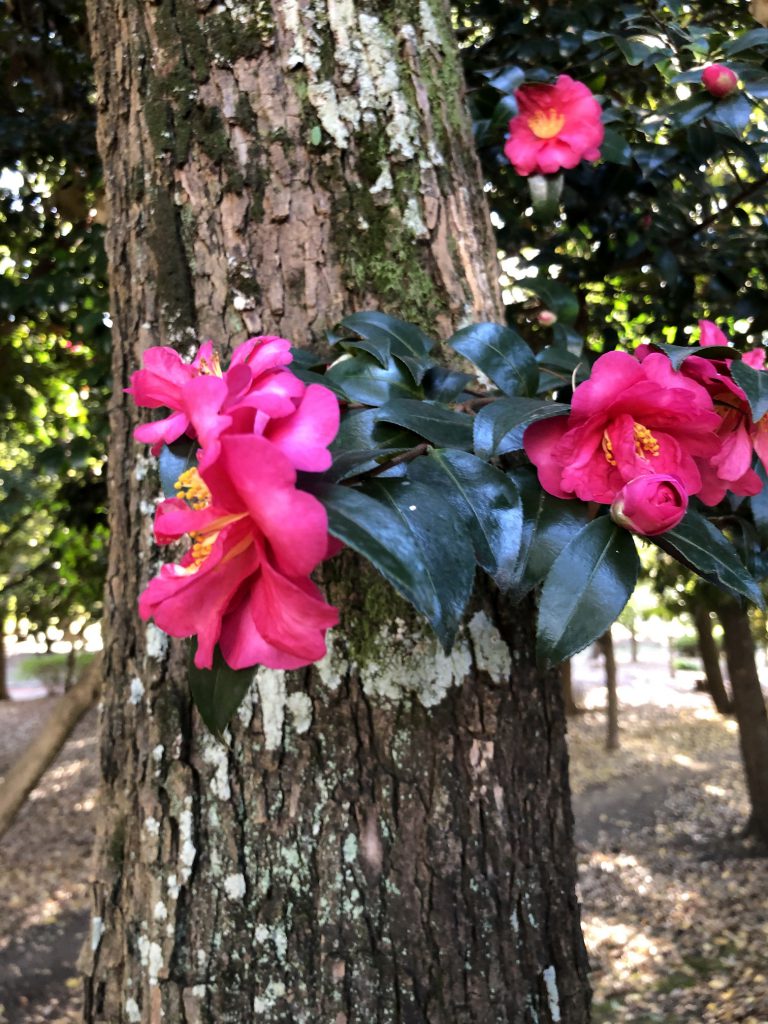
The sun is getting weaker, and the forest with many evergreen vertebrae and oaks is dim even in the daytime.  When the sasanqua flowers bloom in the meantime, the scenery changes completely.  I don’t know if the analogy is appropriate, but I just said, “Sansho is spicy even with small grains.”  It is reminiscent of a single-wheeled insert that decorates a dimly lit four-and-a-half-mat zen tea room. By the way, the peak season for sasanqua flowers will be December, and then camellia, but around January, both are mixed and it is difficult to tell them apart.  There are hybrids of sasanqua and camellia, such as cold-camellia and spring-sasanqua, so it’s reasonable to be indistinguishable.

日差しもますます弱くなって、常緑樹の椎や樫が多い森の中は昼間も薄暗い状態です。そんな中に山茶花が花を付けると、景色がすっかり変わります。例えが適切かどうか分かりませんが、「山椒は小粒でもぴりりと辛い」と言ったところです。薄暗い四畳半の茶室を飾る一輪挿しを思わせます。山茶花の最盛期はこれから十二月、その後は椿と言うことになりますが、一月ごろはどちらも混在していて、なかなか見分けが着きません。寒椿や春山茶花のように山茶花と椿の交雑種がありますから、見分けが着かないのももっともですね。

シロバナの タンポポ見つけて 秋小径

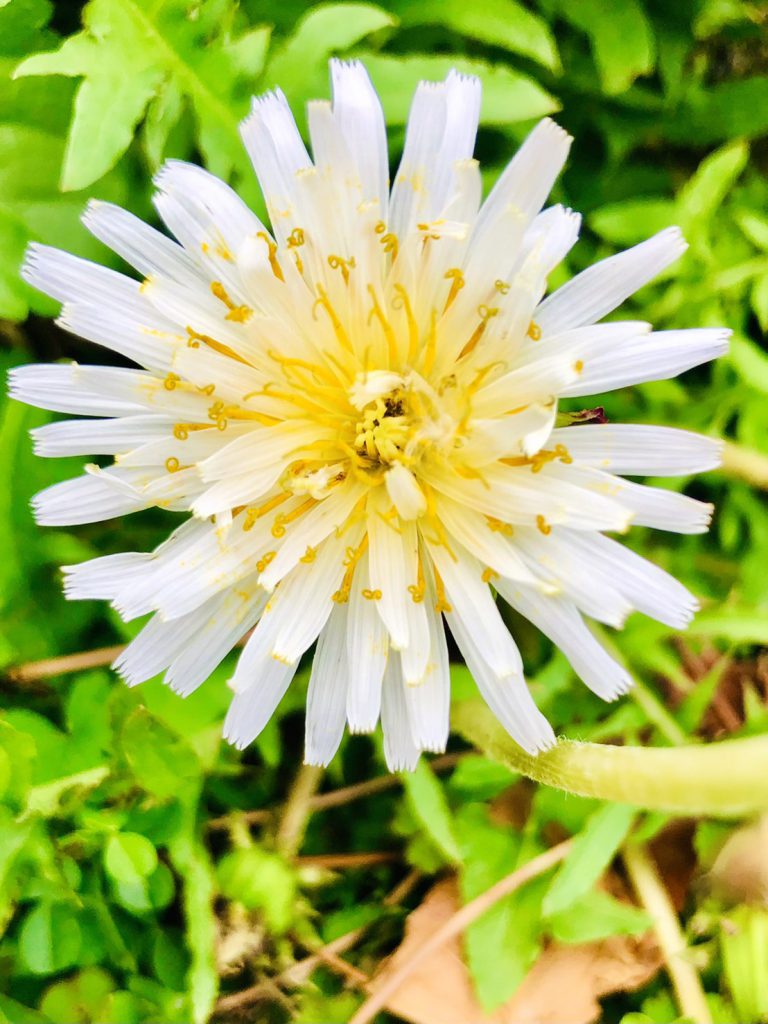
Speaking of Tanpopo (dandelions), the general image is that they are yellow and bloom in spring.  Tanpopo is also a spring season word in haiku.  Native Tanpopo only bloom during the limited period of spring.  Western Tanpopo can be seen for a long time, not only in spring but also in summer.  Western Tanpopo have strong vitality, and the number of native Tanpopo is gradually decreasing.  Shirobana-Tanpop (Taraxacum albidum) is one of the few such native species, a more limited and rare dandelion.  Of course, it blooms in spring, but recently, I often see a note on SNS saying that I found Shirobana-Tanpopo in autumn.  Some people are worried that it may be due to climate variability, but like winter cherry blossoms, it has been around for a long time, and it seems that the cause is the misreading of the climate of the plants.  By the way, the flower language of Shirobana-Tanpopo is “Look for me and stare at me.”

タンポポと言えば、黄色くて春咲く花と言うのが一般的なイメージです。俳句でもタンポポは春の季語になっています。在来種のタンポポは春の限られた期間にしか咲きません。長く見られたり、春はもちろん、夏にも見かけるのは西洋タンポポです。西洋タンポポは生命力が強く在来種のタンポポは段々少なくなってきています。シロバナタンポポはそうした数少ない在来種の、更に限られた珍しいタンポポです。もちろん春にも咲きますが、最近は、秋にシロバナタンポポを見つけたと言う書き込みがSNSでもよく見掛けます。気候変動の性ではないかと危惧する方もいますが、冬桜と同じで昔からあり、植物の気候の読み違いに原因がある様です。因みに、シロバナタンポポの花言葉は「私を探して、そして見つめて」です。

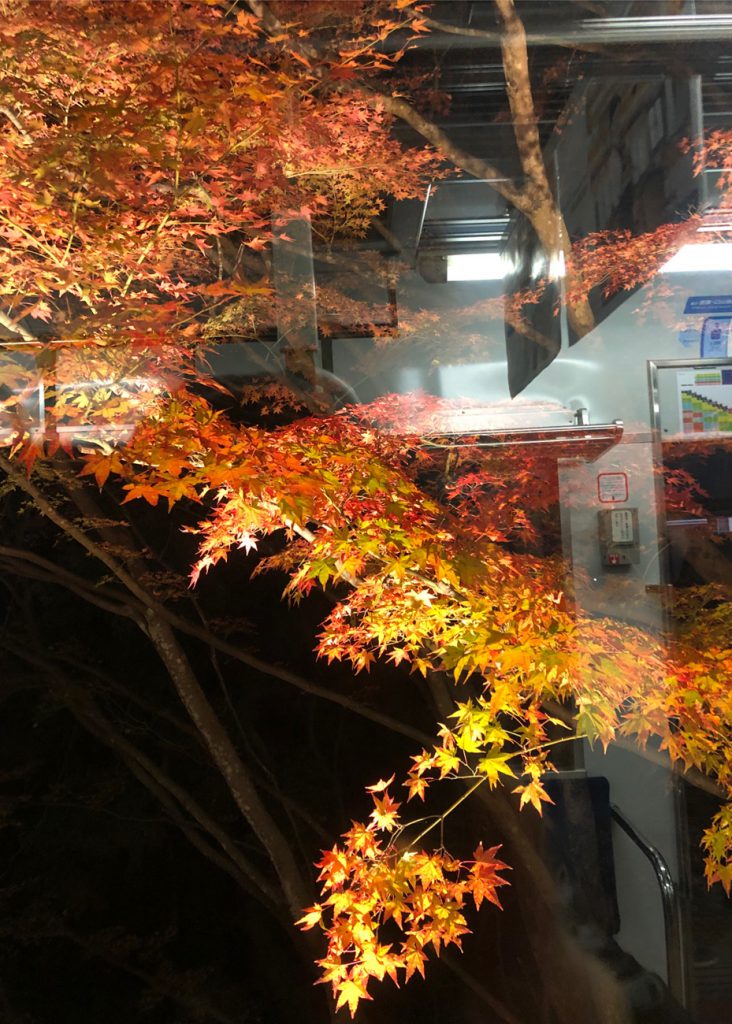
叡電の 車窓に飛び込む 大紅葉

About 20 minutes by Eizan train from Demachiyanagi station in Kyoto to Kurama station, there is a so-called “Momiji tunnel” between Ichihara station and Ninose station.  Approximately 280 Iroha-momiji and Oo-momiji (Both are Japanese autumn leaves) grow naturally in a section of 250 m.  Young leaves and green leaves from spring to summer are good, but after all it is autumn leaves.  During the season the narrow Demachiyanagi Station is full of tourists day and night.  This time, at night, I departed by a new model “Hiei” with a large oval frame on the front.  After driving in the city for a while, the autumn leaves begin to be seen from the car, and when approaching the “Maple Tunnel”, cheers rise from everywhere in the car.  The windows are still closed, but it seems that the illuminated autumn leaves are jumping into the car.  Unfortunately due to the heavy rain in July this year, earth and sand have collapsed along the railway line, and there is still no prospect of recovery.

京都の出町柳駅から鞍馬駅行きの叡山電車で約20分、市原駅と二ノ瀬駅間に通称「もみじのトンネル」があります。約250mの区間におよそ280本のイロハモミジ、オオモミジが自生しています。春から夏の若葉、青葉もいいですが、やはり何と言っても秋の紅葉です。シーズンともなれば狭い出町柳駅は昼も夜も観光客でいっぱいです。今回は夜、前面に楕円形の大きな枠の入った新型車両「ひえい」に乗って出発。しばらく市街地を走るとやがて車両から紅葉が見え始め、「もみじトンネル」に差し掛かると、車内の至る所から歓声が上がります。窓は閉め切ったままですが、ライトアップされた紅葉が車内に飛び込んで来る様です。今年は七月の豪雨で沿線に土砂が崩れ落ち、未だに復旧の目処が立っていません。

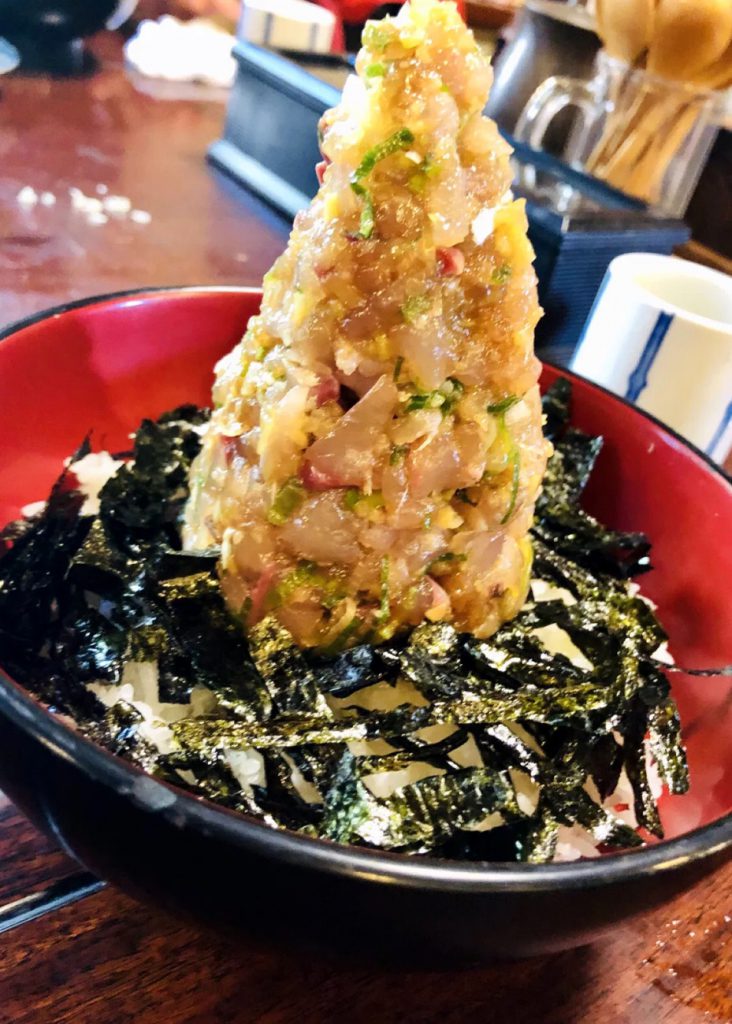
天丼で ひと足早く クリスマス

Even though it’s still November, when I enter the Tendon restaurant, I find “Tree Tendon”.  From now on, it’s all about Christmas.

Looking back at the Christmas scene, it was before the 1960s when adults made a fuss at sex shops and dance halls, and drunken groups made a fuss in the red-light district wearing pointed hats.  From the 1960s to the 1970s, many office workers went to their own homes in the suburbs.  They’re back in the old Christmas day of fun for kids.  From the beginning of the 70’s, in the era of the last prosperous boom of the Showa era, a scene appeared in which young couples paid a large amount of money at disproportionate stores.  And a bubble.  It’s been over 100 years since Christmas was celebrated in a Japanese style, but no one feels the tradition there.  That is the characteristic of Christmas in Japan.  By the way, this year is Christmas under the new corona.  It looks like a new Christmas landscape will be born again.

まだ11月だというのに、天丼屋さんに入ったら「ツリー天丼」。これからはクリスマス一色ですね。

クリスマス風景も振り返れば、風俗店やダンスホールで大人たちが大騒ぎして、とんがり帽子を被って、酔っ払った集団が歓楽街で大騒ぎをした60年代以前。60年代から70年代は郊外のマイホームへと向かうサラリーマンのパパが多くなりました。子供のためのお楽しみの日という昔ふうのクリスマスに戻ったわけですね。70年代に入ってからは、昭和最後の好景気に突入する時代で、その風潮とあいまって、若者カップルが、分不相応な店で高額な支払いをする、という風景が出現しました。そしてバブル。クリスマスも日本風に祝いだして、すでに100年を超えているのですが、だれもそこに伝統を感じてはいません。それが日本クリスマスの特徴です。さて、今年は新型コロナ下のクリスマス。また新しいクリスマス風景が生まれそうですね。

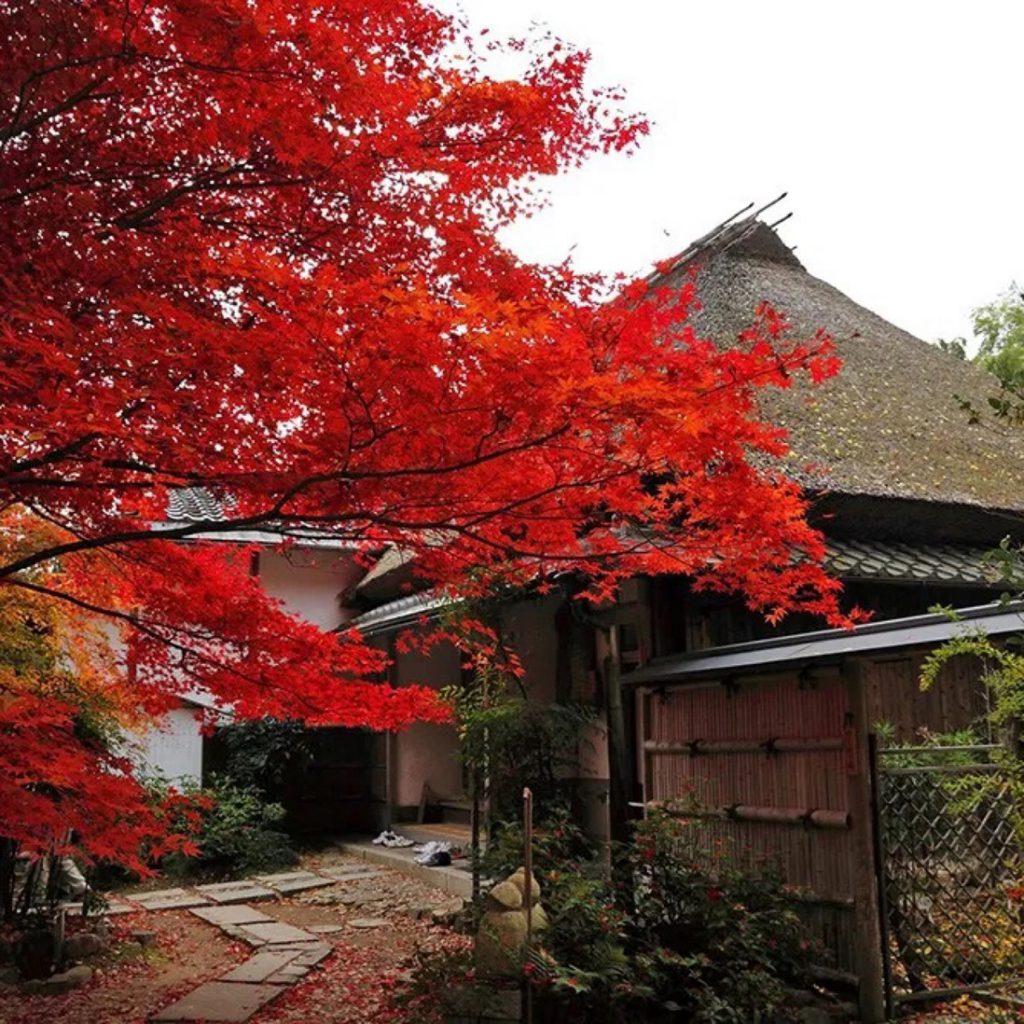
写経終え 紅葉訪ねて 直指庵

During the fall foliage season, I often visited Jikishi-an in Oku-Sagano, Kyoto.  Jikishi-an is located far at Daikakuji Temple, where the Northern Court was established during the Nanbokucho period, and a 15-minute walk further back.  Even in Sagano, which is popular with women, it is as popular as Giouji.  There are more than 5,000 “memorial notes ” written by people from all over the country, most of which are written by women.  Therefore, some people think that Jikishi-an is a nunnery  temple.  Jikishi-an was founded as the Zen temple of the Rinzai sect in the early Edo period, and is now a temple of the Jodo sect.  At one time, it was a temple with a grand Buddhist temple, but in the late Edo period it declined to the point where only the founder’s grave remained.  It was rebuilt by Tsuzaki Muraoka Tsubone (real name, Noriko Tsuzaki), an old woman of the duke’s Konoe family, who was also a member of Ansei Purge.  She adopted Atsu-hime for a long time and was rescued by her petition. And it was this temple on the verge of abolition that she chose as the place of demise.  She named it Jikishi-an and devoted herself to raising the children of the land.  It remains closed this year due to the new Corona.

紅葉の時期よく訪れたのは京都奥嵯峨野の直指庵です。南北朝時代に北朝が置かれた大覚寺で写経を終え、そこから更に奥へ15分ほど歩いた所に直指庵があります。女性に人気のある嵯峨野でも、祇王寺と並ぶ人気のお寺です。全国から訪れた人達が綴った「思い出草」は5000冊を超え、その大半は女性が記したものです。それ故に直指庵は尼寺と思っている人もいる程です。直指庵は江戸時代初期に臨済宗の禅寺として創建され、現在は浄土宗のお寺です。一時は大伽藍を持つお寺でしたが、江戸末期には開祖のお墓だけが残る程衰退しました。それを再建したのは、安政の大獄にも連座した「勤王の女傑」、近衛家の老女津崎村岡局(本名、津崎矩子)です。長く篤姫の養女を務め、篤姫の嘆願で命拾いをして終焉の地として選んだのが、廃止寸前のこのお寺でした。直指庵と名付け、土地の子女の薫育に尽くしました。今年は新型コロナの為、閉されたままです。