紅葉狂い 湖東三山 ふらり旅

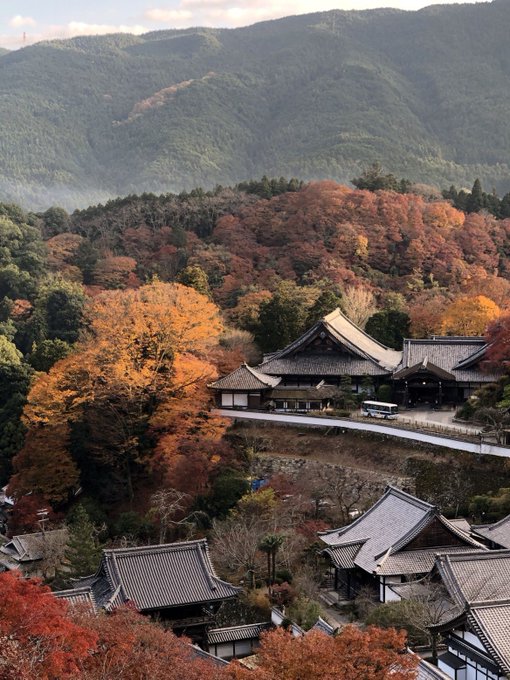
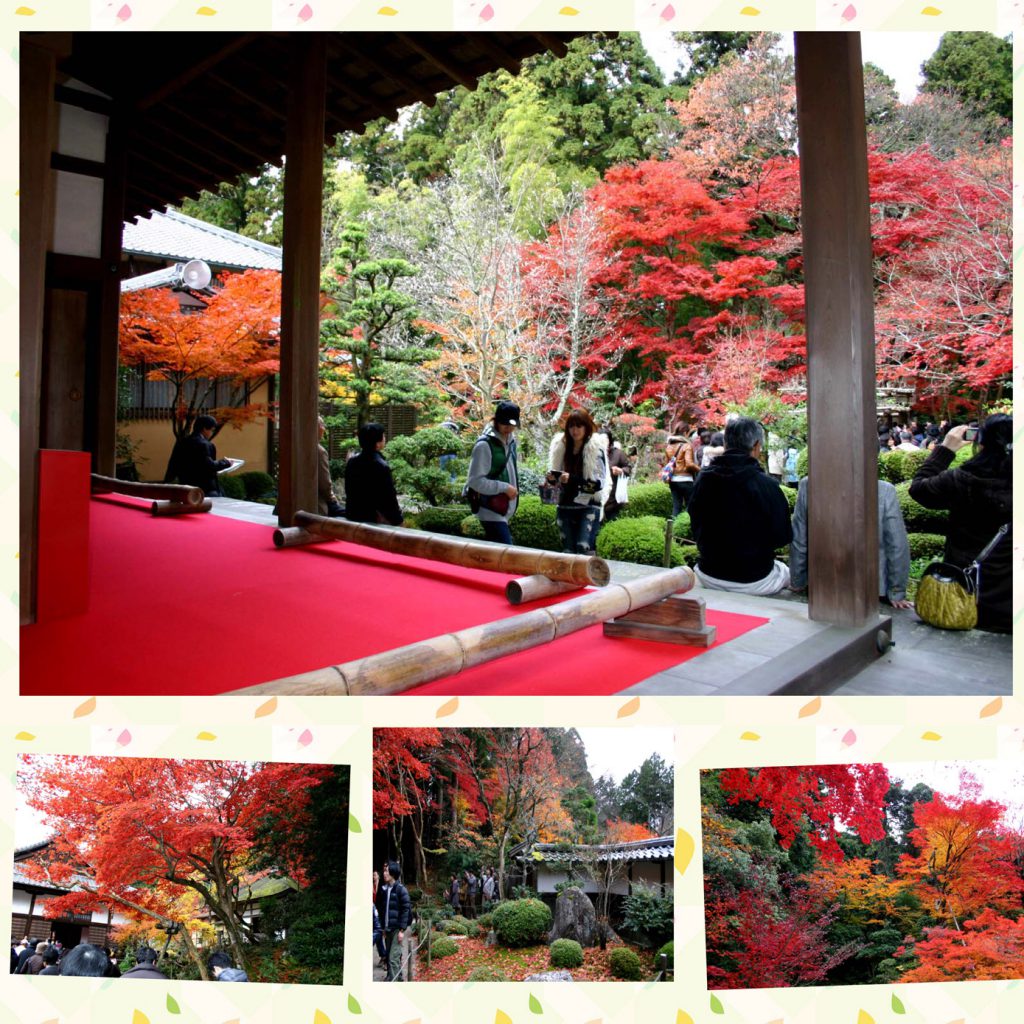
Koto Sanzan is a general term for the three Tendai sect temples, Saimyoji, Kongorinji, and Hyakusaiji, which are located on the west side of the Suzuka Mountains on the east side of Lake Biwa.  They are known as a famous spot for autumn leaves along with Eigenji Temple, a Zen temple of the Rinzai sect located in the southeast of Hyakusaiji Temple.  During the Muromachi period, it prospered as the Five Temples of Koto along with Binmanji Temple and Daikakuji Temple, but it declined due to the Onin War and the burning of Oda Nobunaga.  After that, these three Temples, which had a large temple area during the Edo period, have been reconstructed and continue to this day.  It’s not Kimetsu-no-Yaiba (Demon Slayer), but it seems that Nobunaga’s devilishness, which has set the branch temples of the Tendai sect Enryakuji Temple on fire and the obsession of the common people with a strong faith is burning up at the same time.

湖東三山とは、琵琶湖の東側、鈴鹿山脈の西山腹に建つ西明寺、金剛輪寺、百済寺の三つの天台宗寺院の総称です。百済寺の南東に位置する臨済宗の禅寺、永源寺と共に紅葉の名所として知られています。室町時代には、敏満寺、大覚寺と合わせて湖東五山として栄えましたが、応仁の乱や織田信長の焼き討ちによって衰退しました。その後、江戸時代に寺域の広かったこの三山が復興を果たし、今に至っています。鬼滅の刃ではありませんが、神も仏も何するものぞと、天台宗延暦寺を始め、末寺に至るまで焼き尽くした信長の鬼気と、信仰心篤い庶民の執念がめらめらと燃え上がっている様です。 
秋茶会 主菓子(おもがし) 見惚れ て 手も付かず

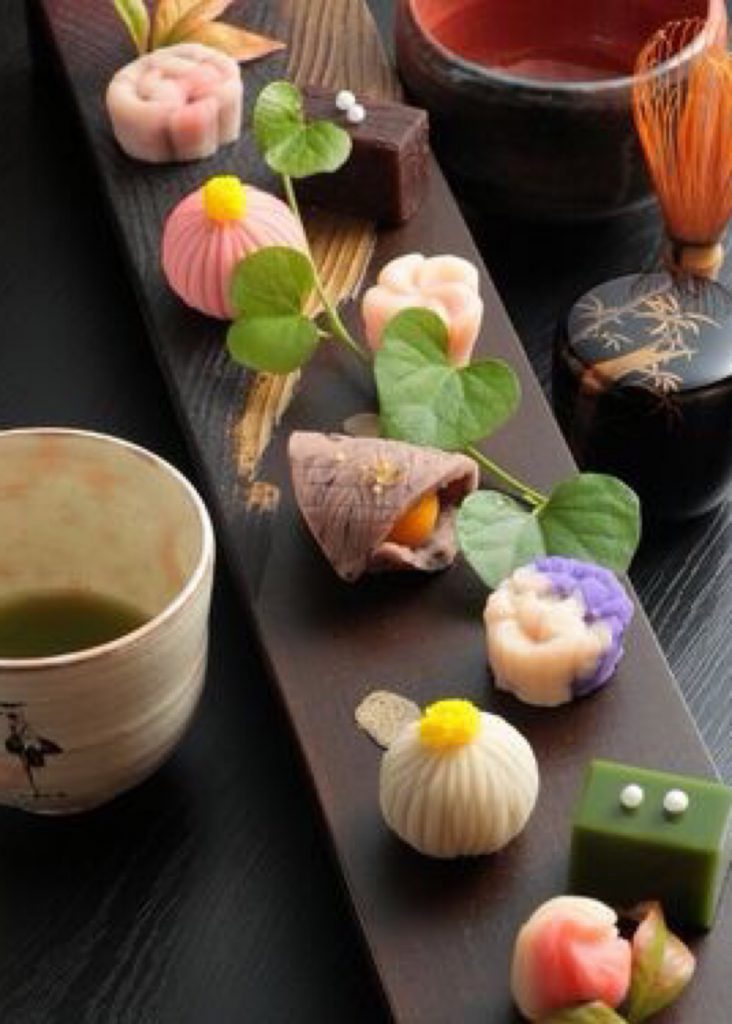
Speaking of tea ceremony, I have an image of Japanese sweets.  Of course, since it is a tea ceremony, tea is the leading role and Japanese sweets are the supporting role.  There are two types of tea at the tea ceremony: “light tea” and “dark tea”.  Light tea is usually accompanied by “dried sweets”, and dark tea is usually served with “main sweets”.  Examples of dried sweets include “Rakugan” and the main sweet is “Yokan”, but these Japanese sweets are too numerous to mention.  Wherever you go in Japan, you will find local specialty Japanese sweets with their own names.  There are many famous Japanese sweets in Kyoto, and they are known as “Kyogashi” or “Kyowagashi”.  The Kyowagashi served at today’s tea party are too cute and beautiful, and the Kuromoji (sweets cut) won’t allow me to reach.

茶会といえば和菓子、ついそんなイメージを持ってしまいます。もちろん茶会ですから、お茶が主役で和菓子は脇役です。茶会のお茶には「薄茶」と「濃茶(こいちゃ)」があります。薄茶には「干菓子(ひがし)」、濃茶には「主菓子(おもがし)」が添えられるのが普通です。干菓子の例としては「落雁」、主菓子は「羊羹」といった物が挙げられますが、これら和菓子には枚挙に暇がありません。日本全国どこに行っても、その土地の名物和菓子があり、独自の名前が付いています。京都の名物和菓子も沢山ありますが、纏めて「京菓子」とか「京和菓子」と言うほど知られています。今日のお茶会に出された京菓子も、余りにも可愛くて、美しくて、黒文字(菓子切り)にもなかなか手が届きません。

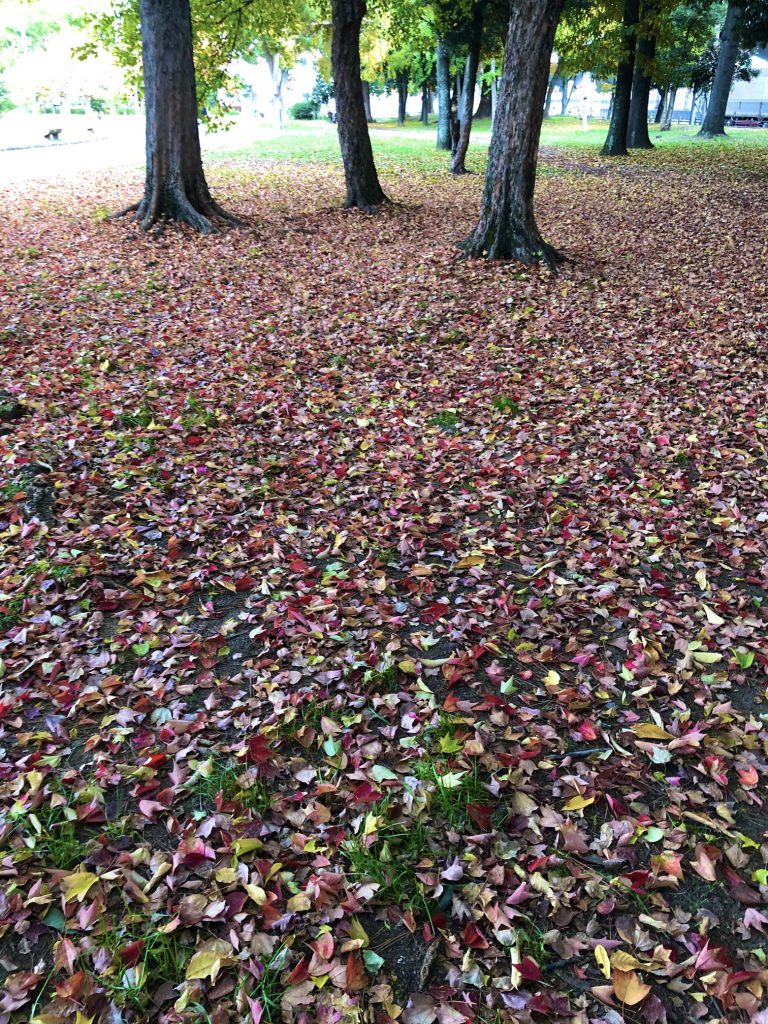
天高く 地上は落ち葉の 綾錦

The fallen leaves that have fallen on the ground are shining like the brocade in the sunlight through the trees.  But it’s hot.  Yesterday (11/19), by 15:00, the number of spots on “summer day” with a maximum temperature of 77° F or higher had more than doubled from the day before yesterday to 251 spots.    Even in Osaka, the temperature was 79.7 ° F, which was the latest “summer day” so far, and the record of November 9, 1939 was set for the first time in 81 years.  Even in Akita, Tohoku region, it was the first “summer day” in the history of observation, so the Japanese archipelago feels like early summer.  Only the trees around it are definitely colored, and somehow only people are moving around.

地上に降り積もった落ち葉が木漏れ日を浴びて錦に輝いています。しかし暑いです。昨日(11/19)は、15時までに最高気温が25℃以上の夏日の地点数が一昨日の2倍以上の251地点にのぼったそうです。大阪でも26.6℃とこれまでに最も遅い夏日だった1939年11月9日の記録を81年ぶりに更新したそうです。東北の秋田でも観測史上はじめて11月に夏日となったというから、日本列島はもう初夏といった感じです。辺りの木々だけが確実に色づき、なんだか人だけが右往左往しています。

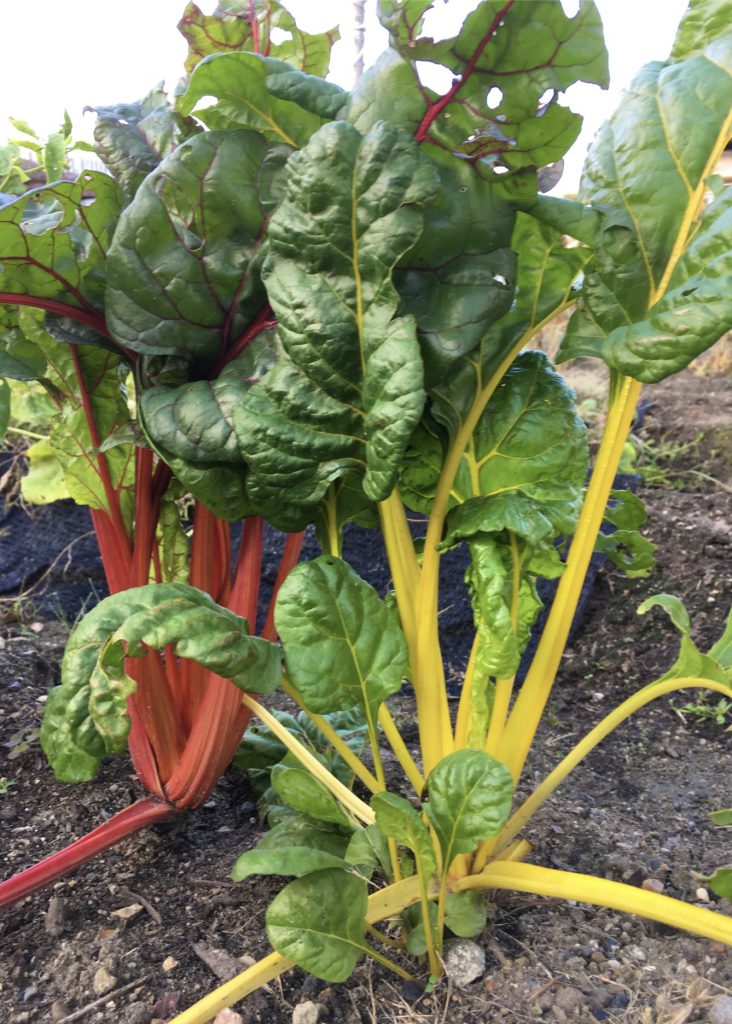
赤と黄の 大地にしっかり スイスチャード

Swiss chard is similar to spinach, but it is called “Hudan-so (Constant vegetables)” in Japan because it can be harvested regardless of the season.  It seems that there are various names depending on the region, such as “Nsunaba” in Okinawa, “Umaina” in Osaka and Kyoto, “Amana” in Okayama, and “Kishana” in Nagano.  The leafstalk and veins are characterized by vivid colors such as red, yellow, pink, and vermilion, and because the colors are beautiful, they are cultivated as foliage plants as well as edible.  In addition to being rich in β-carotene, potassium, and minerals, it is also attractive because it grows vigorously even in the hot summer months when leafy vegetables are difficult to grow.  It adds a bright color to the table, so it goes well with Japanese, Western, and Chinese foods, making it a popular recipe ingredient.

スイスチャードはほうれん草に似ていますが、季節に左右されず収穫できるので、日本では「不断草」と呼ばれています。沖縄では「ンスナバー」、大阪や京都では「ウマイナ」、岡山では「アマナ」、長野では「キシャナ」等など、地方地方によっていろんな呼び方がある様です。葉柄や葉脈が赤や黄色、ピンク、朱色など鮮やかな彩りが特徴で、彩りが綺麗な為、食用以外にも観葉植物としても栽培されています。β-カロテンやカリウム、ミネラルを豊富に含むほか、葉物野菜が育ちにくい夏の暑い時期でも元気に成長する点も魅力です。食卓に明るい彩りを添えてくれるので、和食・洋食・中華、どれにでも合い、人気レシピの食材になっています。

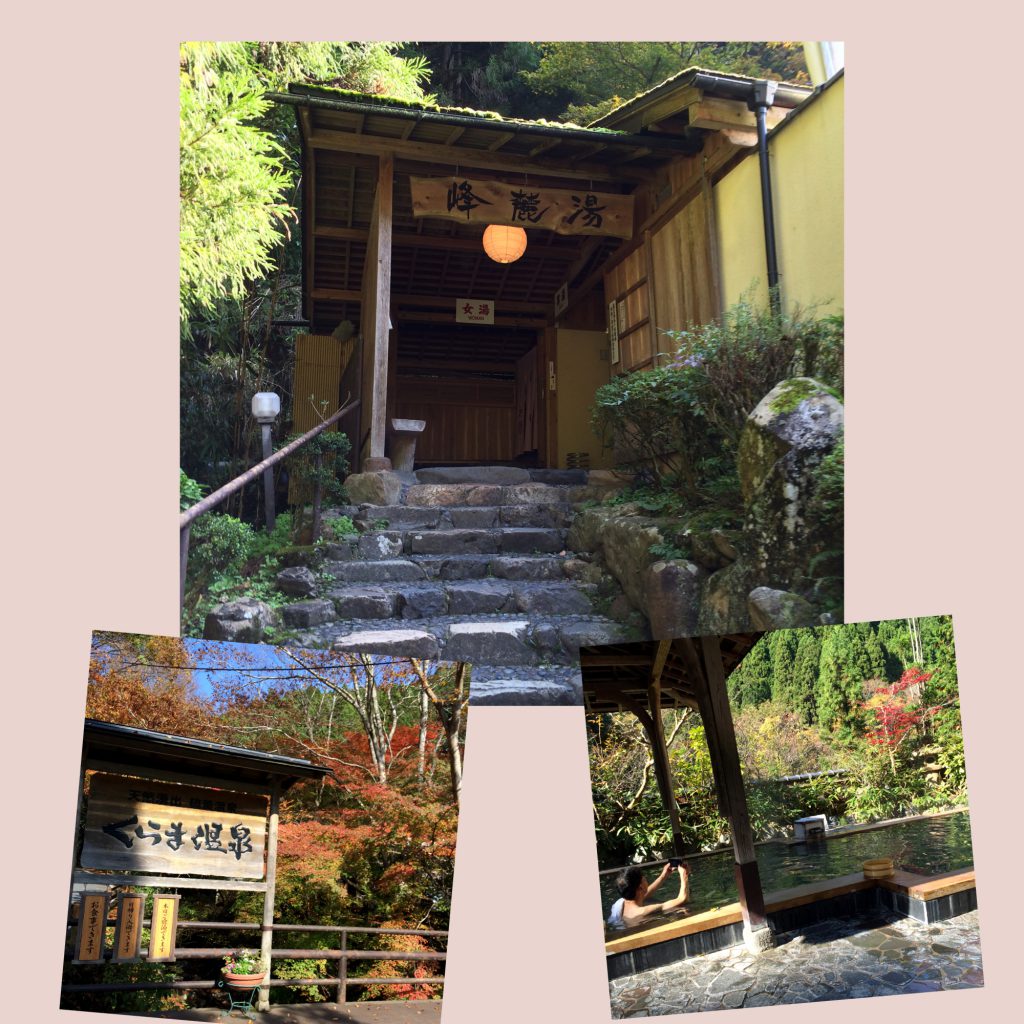
鞍馬の湯 湧き湯の音と 深紅葉

On the way back from visiting Hanase-no-Sato, the inner part of Kyoto, and going over the steep Hanase Pass, there is a turning point for Momoi’s farewell.  From there, I go down the Kurama Highway toward Kyoto, I find the village for the first time, and there is Kurama Onsen.  When going from Kyoto, take a car or Eizan train and go up the Kurama Highway from Kurama Station.  The area around here is full of autumn leaves.  The autumn colors of the famous temple in central Kyoto are good, but the size and color of the autumn colors here are just amazing.  When I soak in the Kurama hot spring “Houroku-no-Yu (Mountain foot hot water) there, all I can hear is the sound of the autumn leaves rubbing and the sound of the hot spring that springs up. There is only one foreigner and no one else.

京都の奥座敷、花背の里を訪れての帰り、険しい花背峠を超えると百井の別れの分岐点があります。そこから鞍馬街道をひたすら京都に向かって下って行くと初めて集落があり、そこに鞍馬温泉があります。京都からなら、車か叡山電車の鞍馬駅から鞍馬街道を奥深く入った所です。もうこの辺りは紅葉一色。京都中心部の名刹の紅葉もいいですが、規模といい、紅葉の色合いといい、ただ絶句するだけです。そこにある鞍馬温泉『峰麓湯』に浸かると、聞こえてくるのは、紅葉の葉が擦れの音と、湧き出す温泉の音だけ。外人さんが一人だけ入っていました。

幾星霜 錦秋広がる 初瀬寺

Hatsuse-dera Temple is another name, and Hase-dera Temple is the official name.  Hase-dera Temple is located on the hillside of Mt. Hatsuse overlooking the Hase Highway that connects Yamato and Ise. And it is supposed to have built in the Nara period in the first half of the 8th century, but The detailed timing and circumstances of the construction are unknown.  Hase-dera Temple was named by Emperor Shomu, who has a strong faith in Buddhism. Before that, it was closely related to Ise-Jingu Shrine, and it seems that it was a sacred place for mountain worship based on Shintoism worship. In particular, Hase-dera has a deep relationship with women, and the eleven-faced Kanzeon Bosatsu, the principal image of the Buddhism, has been the object of worship of women since the Heian period.  Visiting Hase-dera was a wish of a woman for a lifetime too. It also appears in many female classical literature such as “The Pillow Book,” “The Tale of Genji,” and “Sarashina Nikki.”  It is still a very popular temple for women as a “flower temple”.

初瀬寺は別称で長谷寺が正式名です。大和と伊勢を結ぶ初瀬街道を見下ろす初瀬山の中腹に建つ長谷寺は、創建が奈良時代、8世紀前半と推定されますが、創建の詳しい時期や事情は不明です。長谷寺と命名したのは仏教の信仰篤い聖武天皇で、それ以前は伊勢神宮と密接な関係があり、神道の自然崇拝に基づく山岳信仰の聖地であったと思われます。特に女性との関わりは深く、本尊の十一面観世音菩薩は平安時代から女性の信仰の的で、長谷寺詣では女性の一生一代の願いでした。『枕草子』『源氏物語』『更級日記』など、多くの女流古典文学にも登場します。今でも「お花の寺」として、女性にはとても人気のお寺です。

瑞々し 大地に咲いた もみじ花

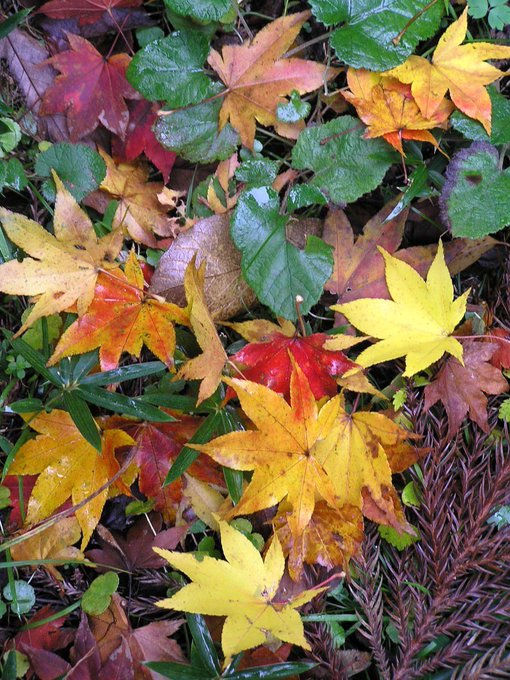
Some places are in full bloom with autumn leaves, while others are a little more patient.  However, entering the mountainous area, it will be in full bloom.  Fallen leaves cover the ground that was lush with the green undergrowth, and are preparing for winter.  It is a characteristic of this period that there are many fallen leaves, red and yellow, and many green leaves.  Unlike the dry winter fallen leaves, it is also characterized by its wetness.  The color variation and the freshness are as beautiful as the autumn leaves on the tree.  The air is chilly, but it’s pleasantly cold.  Recently, the number of people who are interested in fallen leaves is increasing in foreign countries, and the number of posts on Instagram and Pinterest is also increasing.

紅葉満開の所もあれば、もう少し我慢と言う所もあります。山間部に入れば何処とも満開。下草で青々していた大地にも落ち葉が覆い尽くし、冬準備です。落ち葉も赤や黄も有れば、緑の葉が多いのが、この時期の特徴です。乾燥した冬の落ち葉と違い、瑞々しいのも特徴です。色のバリエーションと瑞々しさは、樹上の紅葉にも負けない美しさです。空気は冷えびえしていますが、心地良い冷たさです。最近は、外国にも落ち葉に関心を持つ人達が増えてきて、インスタグラムやピンタレストにも投稿が増えてきています。

目も覚める 銀杏落ち葉の 夜明け道

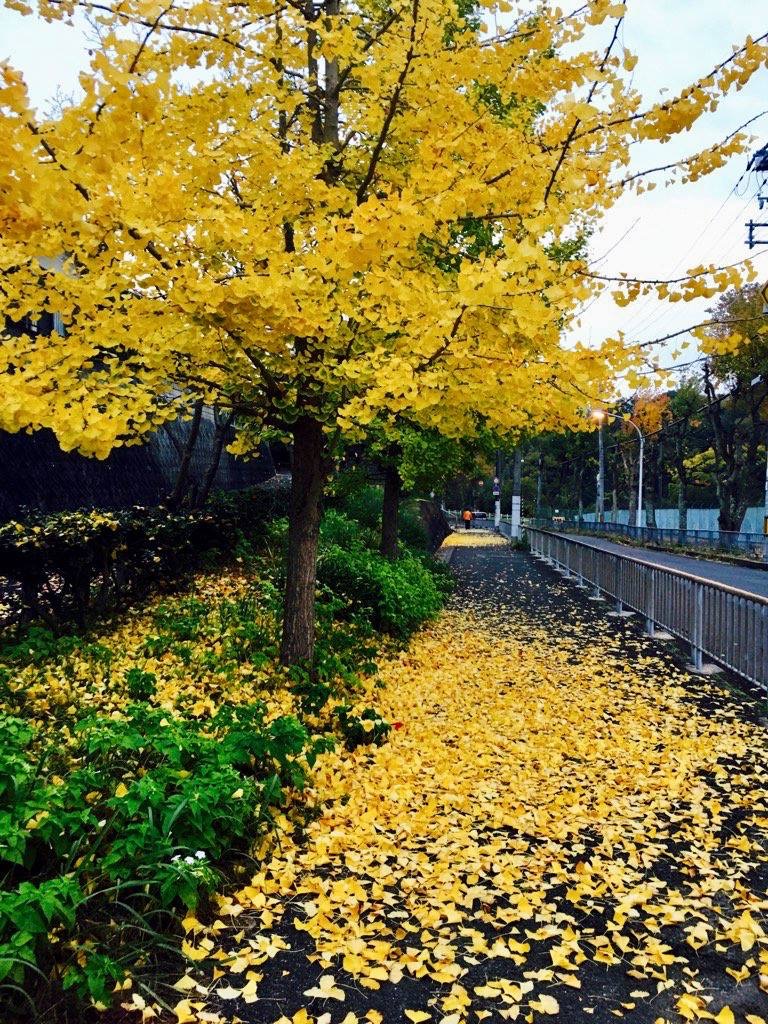
Fallen leaves of Ichoh (ginkgo) are piled up on the promenade that has not dawned yet, illuminating the road brightly. A person who go far ahead are also illuminated by the light of the Ichoh.  In the sky where the night begins to open, the morning first crow is flying somewhere. Autumn is getting deeper and deeper.  I’m still worried about the new corona.  The number of infected people continues to break records in all prefectures.  What will happen to Christmas and New Year that everyone was looking forward to?  Looking at the world, it is far beyond Japan.  The number of infected people and the number of deaths are two or three digits higher than in Japan.  It’s a pandemic that remains in history.  I pray that the preventive vaccine will be completed as soon as possible and that the world will fly toward the 21st century.

まだ開けやらぬ散歩道には銀杏の落ち葉が降り積もり、道を明るく照らしています。ずっと先行く人も銀杏の明かりに照らし出されています。白み始めた空には烏の一番鳥がどこに行くのか急いでいます。秋も益々深まってきました。心配なのはやはり新型コロナです。どの府県も感染者数が記録を更新し続けています。楽しみにしていたクリスマス、そしてお正月、いったいどうなるのでしょう。世界に目を向けると、もう日本どころではありません。感染者数も死亡者数も日本の二桁も三桁も上です。まさに歴史にも残るパンデミックです。一日も早く予防ワクチンが完成して、これからの21世紀に向けて羽ばたける様に祈ります。

浄瑠璃寺 宝の池の 秋日影

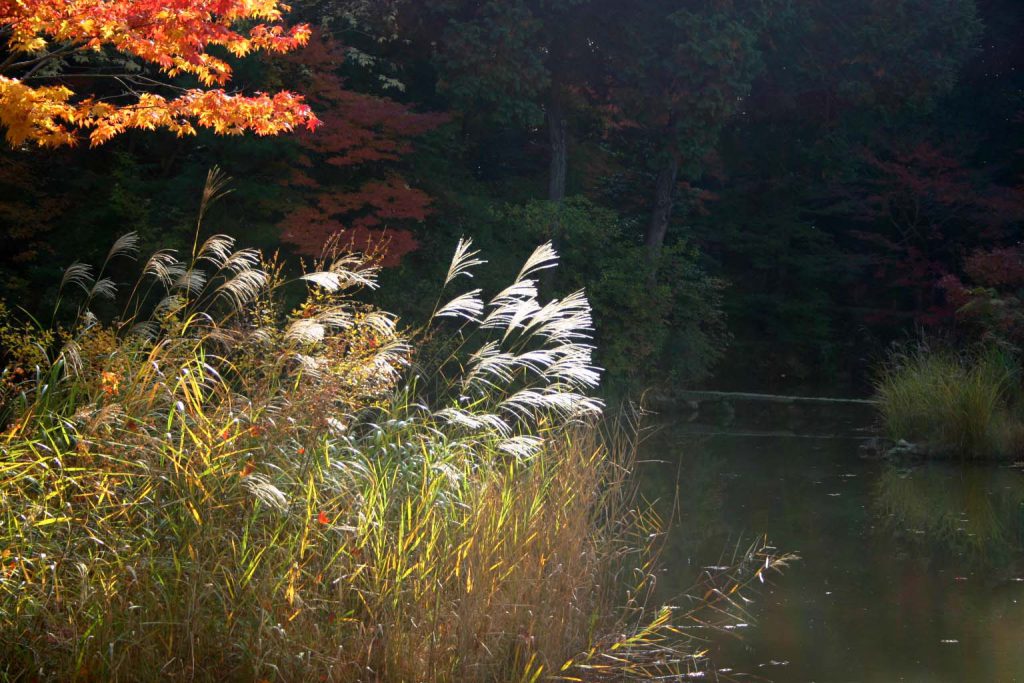
Joruri-ji Temple, Gansenji Temple, many stone Buddha statues, and stone towers line up on the border between Kyoto and Nara, and now it is a tourist destination visited by many people.  When I first visited this place about 50 years ago, I had the impression that it was a really lonely place, there were no shops, and there were a lot of crows.  It is a small temple built at the end of the Heian period. In the deep green precincts, a Jodo style garden centered on the “Takara-ike (a treasure pond)” and a main hall and a three-storied pagoda at the end of the Heian period remain, which conveys the atmosphere of the Heian Dynasty temple.  At the time of the vernal equinox and the autumnal equinox, the sun rises from the three-storied pagoda in the east, and the temples are arranged so as to sink into the main hall in the west over around the “Takara-ike”, and so it is reminiscent of the enthusiasm of the Pure Land Buddhism at that time.

京都と奈良の県境、当尾の里には浄瑠璃寺をはじめ、岩船寺や多くの石仏、石塔が立ち並び、今では多くの人達が訪れる観光地になっています。50年ほど前に初めてこの地を訪れた時は、本当に寂しい所で、店らしい店もなく、やたら烏の多い所だと言う印象しか残っていません。平安時代末期に創建された小ぢんまりしたお寺で、緑深い境内には、「宝池」を中心とした浄土式庭園と平安末期の本堂および三重塔が残り、平安朝寺院の雰囲気を今に伝えています。春秋分の時は、東の三重塔から日が上り、宝池を巡って、西の本堂に沈むように伽藍配置されていて、当時の浄土信仰の篤さを偲ばせます。

もみじ葉に 黄金も染まる 金閣寺

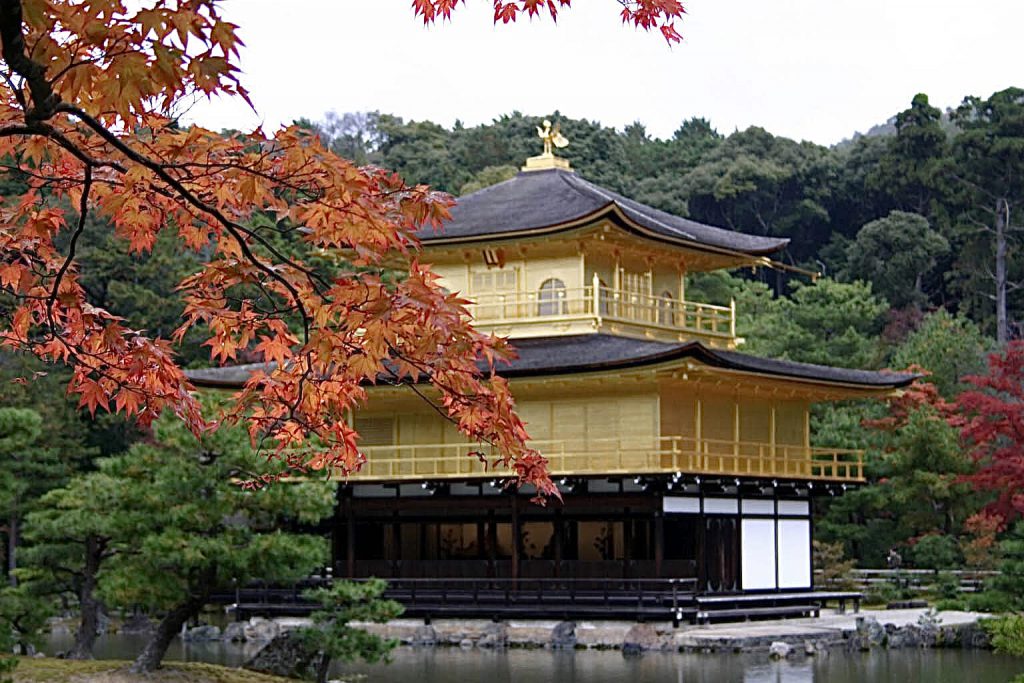
Kinkakuji Temple in the spring when Kakitsubata (Japanese iris) blooms and Kinkakuji Temple now in autumn colors.  These looks are the ultimate in beauty. When the hustle and bustle of the day subsides and the true silence comes, one wants to monopolize the infinitely beautiful things that stand in the silence of the dark night. However, at the same time, he notices the ugliness of the mind and body inherent  in himself, and is jealous of its beauty. As a result, the devilishness of a person who wanted to drown out the self-contradiction in the passion of fire arose and the fire was set up to the Kinkakuji Temple. It is an event in 1950.  Yukio Mishima’s “Kinkakuji” and Tsutomu Minakami’s “Kinkakuji Enjou” took up this case from various angles.         

杜若(カキツバタ)咲く春の金閣寺、そして今、紅葉に染まる金閣寺。甲乙つけがたいこの美しさは美の極致です。昼間の喧騒がおさまり、本当の静寂が訪れたとき、闇夜の静寂にたたずむ無限に美しきものを独占したいという気持ちと、おのが身と心の醜さに引き比べて嫉妬し、炎という情念の中にかき消したいという人の魔性を引き出した結果が金閣寺炎上です。1950年、昭和25年の出来事です。三島由紀夫の『金閣寺』や水上勉の『金閣寺炎上』には、いろんな角度からこの事件が取り上げられています。