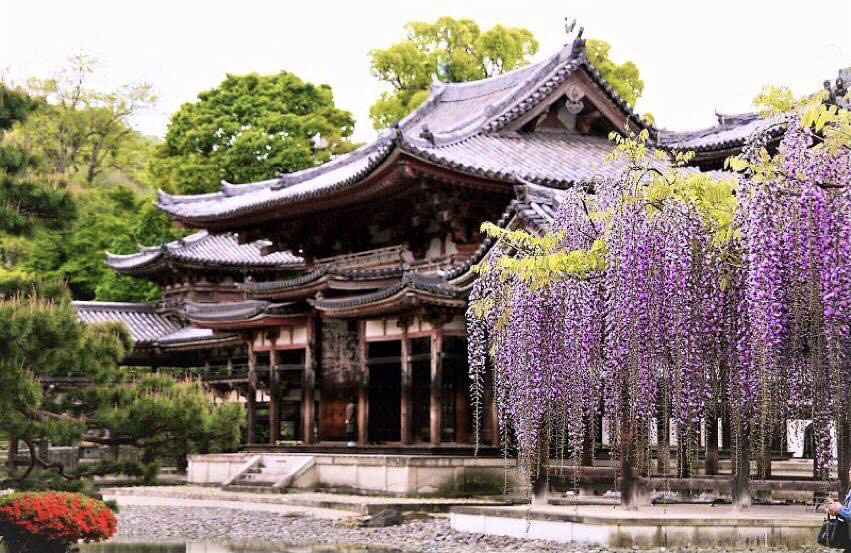
At Byodo-in Temple in Uji, a World Heritage Site, wisteria flowers are in full bloom one week earlier than usual. On the north side of Hoh-Oh-Doh(the Phoenix Hall), four old trees, about 300 years old, have branches spread out on a 20-meter square wisteria trellis. The flower cluster is about 20,000, and the weeping wisteria, which is about 1 meter long, makes the vermilion Phoenix Hall stand out even more. Uji is a town where the scent of Uji tea drifts throughout the town. The faces of many writers, tanka poets, haiku poets and painters who have visited this area in the past come to mind when going around Byodo-in Temple, where the sweet scent of wisteria blends into the fragrant scent of Uji tea.
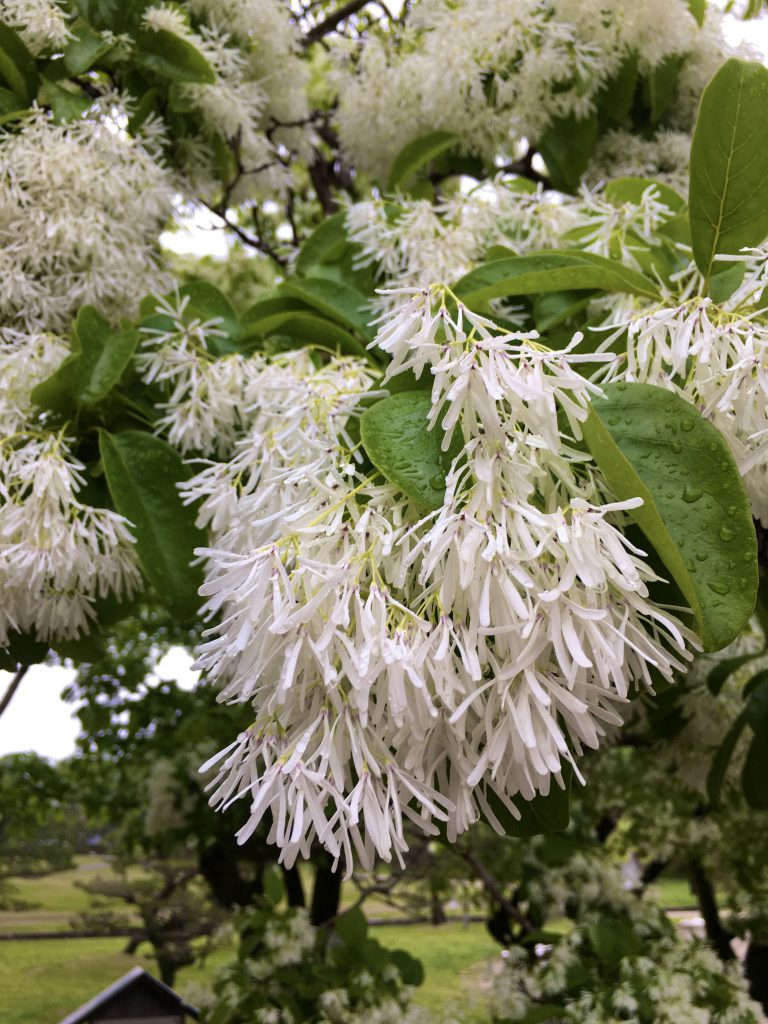
The name is interesting. In Kansai, when you say “what is this?”, you say “Nanja korewa?”, and when you say “you are an excellent person,” you say “Omae wa taishita monja”. After all, during that everybody asked “What kind of flower is this flower?”, the word of that question would have become the name of the flower as it is. In the Meiji era, there was this Nanja-Monja tree along the road of Aoyama Parade Ground (now Meiji) Jingu Gaien) in Tokyo, and nobody know the true name. Whenever anyone asked about this tree, everyone answered that it is Nanja-Monja. Nanja-monja is a commonly used name and the official name is Hitotsuba-tago. This is also an strange name, and it is a flower that looks just like Gohei(a sacred wand with strips of white paper) used by the priest at the shrine. In fact, it is said that it was a flower used in Shinto rituals in the past, so it may be the source of Gohei.
In the morning news, I was told that plum blossoms had bloomed in Hakodate, Hokkaido. The cherry blossoms have already bloomed, and it seems that the cherry blossom season in Hokkaido is about to begin. In Kansai, Yoshino’s Oku Senbon is in full bloom now. Meanwhile, information on the best time to see tulips has been arriving from all over Japan. Like cherry blossoms and roses, tulips also bloom all over Japan from Hokkaido to Okinawa, coloring the spring season. However, Okinawa has a subtropical climate, so it is not so old that tulips became to be able to be seen. It was said that tulips do not grow in warm Okinawa because they usually bloom in spring after a cold winter period. After refrigerating the bulbs and selecting the varieties at the Tropical Dream Center in Okinawa, it seems that the tulips have become to bloom earlier than anywhere else by using the climate of Okinawa. The best time to see tulips is in January in Okinawa and late May in Hokkaido, and during that time, you can see magnificent tulip scenery all over Japan, so Japan beats even the originator Netherlands in tulips.
Kinme-Dai(Splendid alfonsino) is widely distributed worldwide from the Pacific Ocean to the Atlantic Ocean and from the tropics of the Indian Ocean to the temperate regions. It is a completely different variety from Ma-Dai(red sea bream). It is widely distributed in the waters near Japan, but it is mainly caught along the Pacific coast from off the eastern coast of Kanto to the Ogasawara Islands and Okinawa. Among them, the ones caught from off Boso to the Izu Peninsula and around the Izu Islands are landed at Shimoda Port, which is the largest landing volume in Japan. At Shimoda Port, there are many high-quality, greasy fish in the vicinity of Oshima, and the Kinmedai caught by single fishing is branded as “Ji-Kinme” or “Toro-Kinme” and has become a high-class Kinme-Dai. The freshly landed Kinme-Dai is bright red and has big eyes and shines golden. There is a theory that if it is landed in the same color as Ma-Dai in the deep sea, it will turn red, while there is also theory that if it is red in the deep sea, this red will look black and become a protective color.
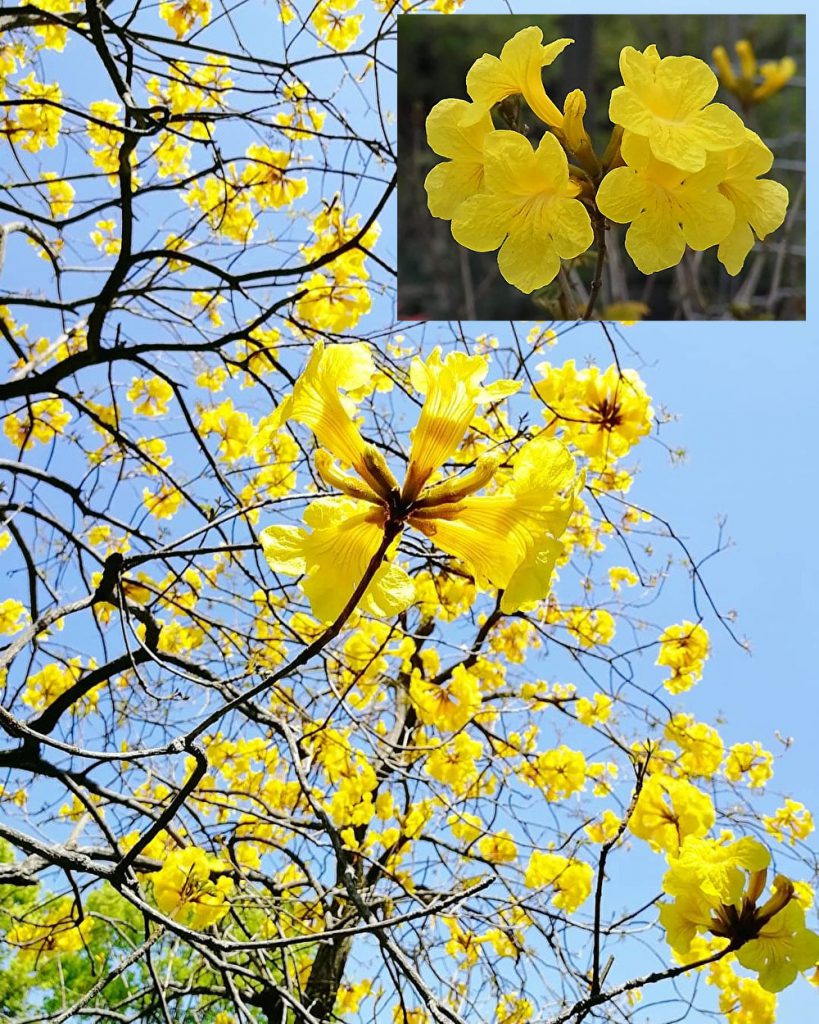
Kogane-Nohzen is a Japanese name named in 1978. The tree is native to Brazil and Colombia, and is over 5m tall. In Brazil, this group is called “Ipe” in Indio’s language, and it is familiar as a national flower like Japanese cherry blossoms. Introduced in Okinawa Prefecture from Brazil in 1974, it is gradually spreading nationwide, but it is still a rare tree. In Osaka, it is planted in the Nagai Park Botanical Garden in Osaka City. In Okinawa, this flower is called “Ippei”, and there is a street called “Ippei-dori”, and there are also festivals. The Japanese name, Kogane-Nohzen, is written in Kanji as “黄金凌霄” which means “a flower that surpasses Sky”. The English name is Golden Trumpet Tree, which means “yellow trumpet-shaped flower” and is very easy to understand. March-April is the best time to see the flowers, and as a flower to celebrate graduates and new students, it is as pleasing as cherry blossoms.
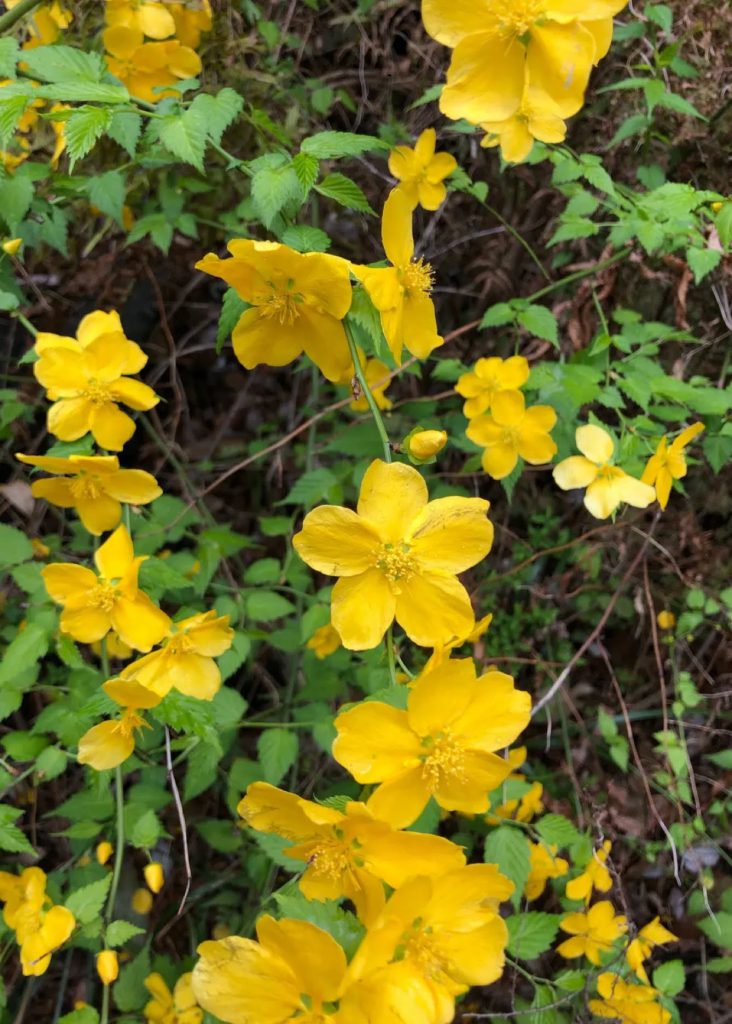
Yamabuki flowers are in full bloom in the sunny spot of the bush. Speaking of Yamabuki, I immediately remember Ota Dokan. When Dokan Ota tries to rent a Mino(straw raincoat) at a farmhouse, the daughter offers a branch of Yamabuki(Japanese kerria) instead of the Mino. Her daughter responded that there was no Mino, in line with Waka “Seven-folded and double-flowered flowers are blooming, but I am sad that Yamabuki has nothing of the fruits”. Dokan, who did not know the Tanka, got angry with his daughter and left. It is well known that Dokan, who was ashamed of his ignorance later, mastered the field of Waka. Dokan was a warrior in the Warring States period with many anecdotes such as being impressed by a frog trying to jump on a willow and becoming a master of calligraphy. Dokan also built Edo Castle. Ota Dokan must have been a military commander who excels in both literary and military arts. Yamabuki is a flower that has been popular since the time of “Manyoshu”, and the bright reddish Yamabuki color is warm, not pure yellow. Yamabuki color is also called golden color, and in the Edo period, “Yamabuki” was also a cant word for “bribery koban”.
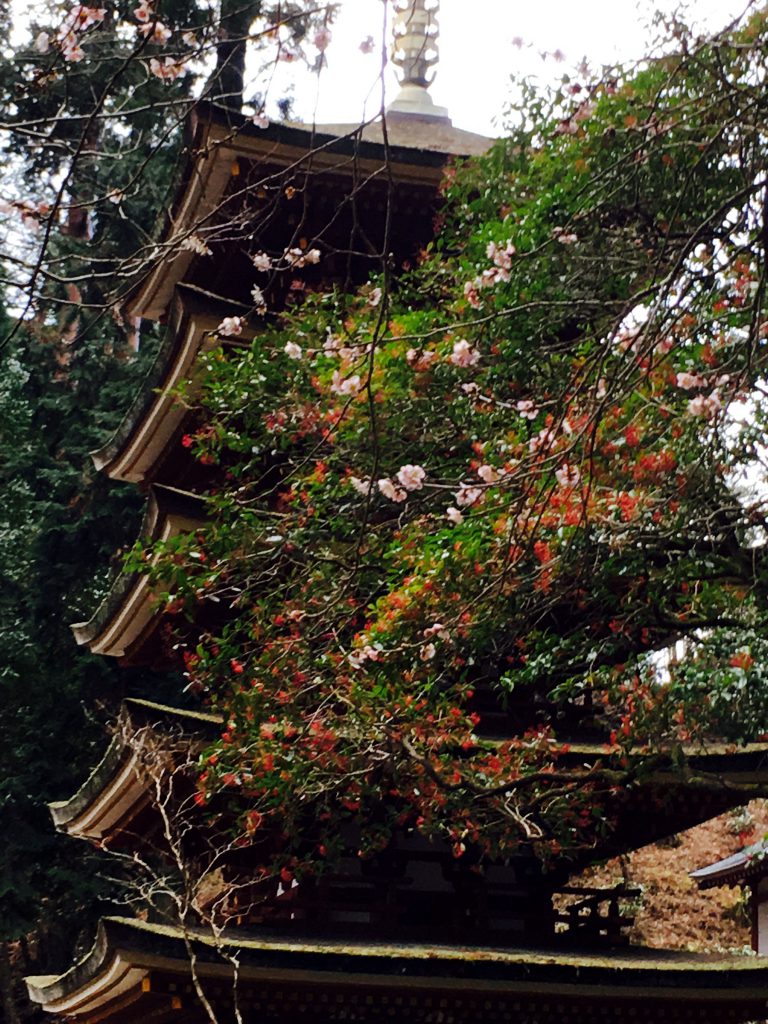
Murouji is a mountain temple located in Murou, deep in the Nara Basin and near the border of Mie Prefecture. Due to the volcanic terrain of Murou, there are many strange rocks and caves, and the caves were dragon holes, that is, sacred places of ancient religions that gathered the belief of rain as a resident of the dragon god. Eventually, Nara Buddhism, which was introduced from China, was organized as the Nanto Rikushu, and Murouji was built here as the branch temple of Kofukuji, the main temple of the Hosso sect. After that, Murouji Temple strengthened the esoteric Buddhism of Heian Buddhism (Shingon Buddhism, Tendai Buddhism), but it was still the branch temple of Kofukuji Temple. After then, in the Edo period, it became a Shingon sect temple with the backing of Keishoin, the mother of Tsunayoshi Tokugawa. Koyasan, the base of the Shingon sect, was once banned from women, but Murouji, where women were allowed to visit from that time, was given another name, “Women’s Koyasan.” At the entrance of the mountain gate, which is watched by the red and blue statues of Nio, there is a large stone monument deeply engraved with “Woman Koyasan Murouji”.
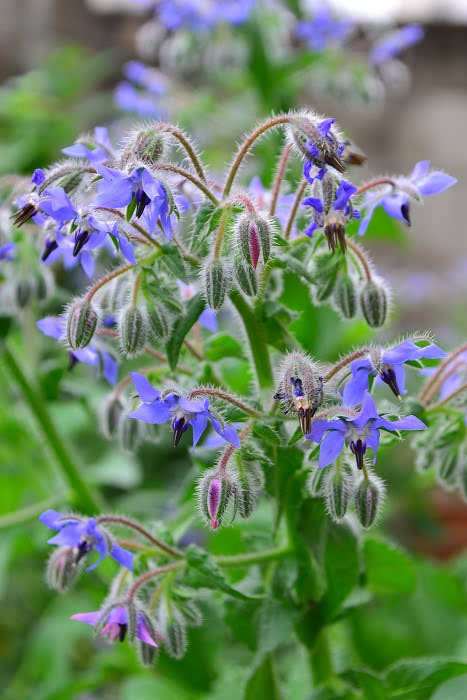
Bright blue-purple flowers are blooming here and there in the strawberry field. It is a flower of Rurijisa. The English name is Borage. The flowers that begin to bloom are pink, but gradually turn into a cool sky blue. The blue color of borage is also called “Madonna blue” because it was used when drawing the blue garment of the Virgin Mary. Borage has long been known to have various medicinal properties and is used for food and especially as an herb. In the West, it is said that knights drank herbal tea to boost morale, but the effect of encouraging people is not an one-side belief, and modern science has confirmed that borage secretes adrenaline against fear and stress and is effective against depression. In addition, since bees flock to the borage flowers, they are planted for pollination of strawberries and collection of honey.
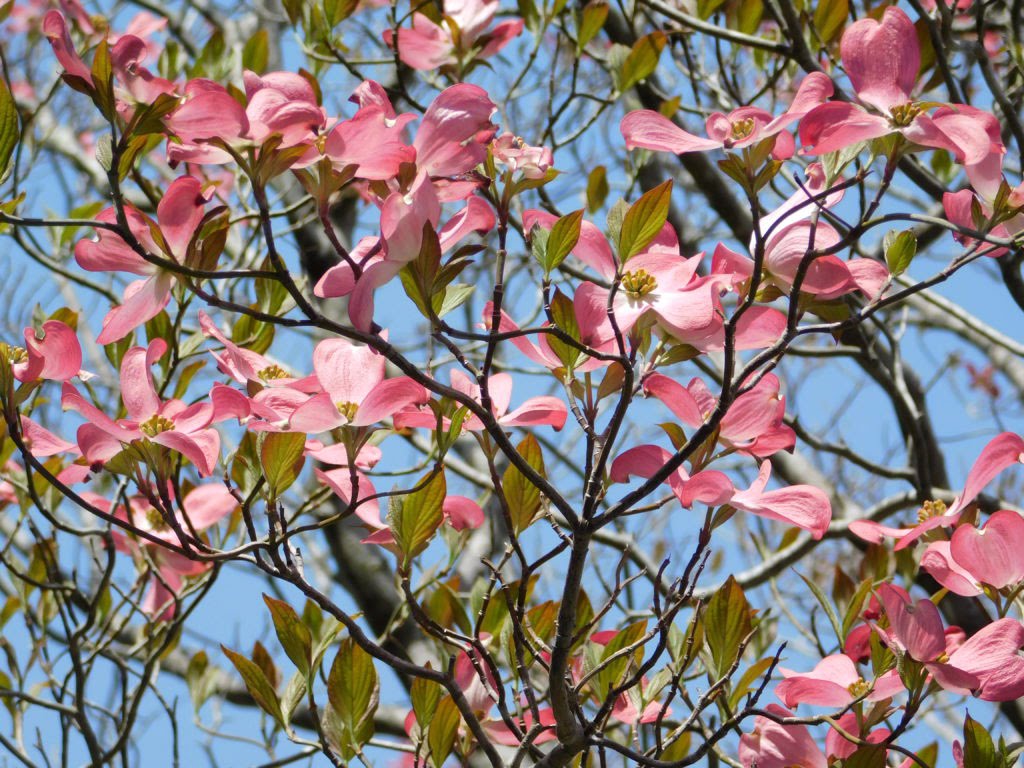
Sakura is associated with a samurai, and Hanamizuki is associated with a woman. Sakura has the magnificence of overwhelming the scenery around them, but Hanamizuki seems to blend in with the scenery around them and bloom gracefully. The sound of Hanamizuki is very good and has a soothing sound;
“You are a lightly blushing precious one, I hope the never ending dream Will finally come to an end I hope you and your beloved Last for a hundred years”
“Hanamizuki”, which Hitoto sang the sad feelings, because her friend died in the 9/11 terrorist attacks in 2001 and the friend had a child, was featured in school textbooks;
“Since its release in 2004, Hanamizuki has become a well-known pop song in Japan. Interestingly enough, however, few listeners recognize in the lyrics Hitoto Yo’s message of peace, believing it is merely a love song.”
“Hanamizuki” is not a lyric love song, but a song with a feeling for peace. Hanamizuki also has a history of being donated to the city of Tokyo by the wife of the then US President Taft in 1915, in return for Ozaki (then mayor of Tokyo) ‘s donations, cherry blossom saplings, in 1912. Hanamizuki, a symbol of goodwill between Japan and the United States, expanded its horizons to the “symbol” of “peace” through the song of Ms Hitoto.
“Since its release in 2004, Hanamizuki has become a well-known pop song in Japan. Interestingly enough, however, few listeners recognize in the lyrics Hitoto Yo’s message of peace, believing it is merely a love song.” (「『ハナミズキ』は2004年にリリースされてから、日本ではポップソングとしてよく知られるようになった。しかし興味深いことに、一青さんが歌詞の中に平和へのメッセージをこめていると気が付いた人はほとんどおらず、単なるラブソングであると信じている」)
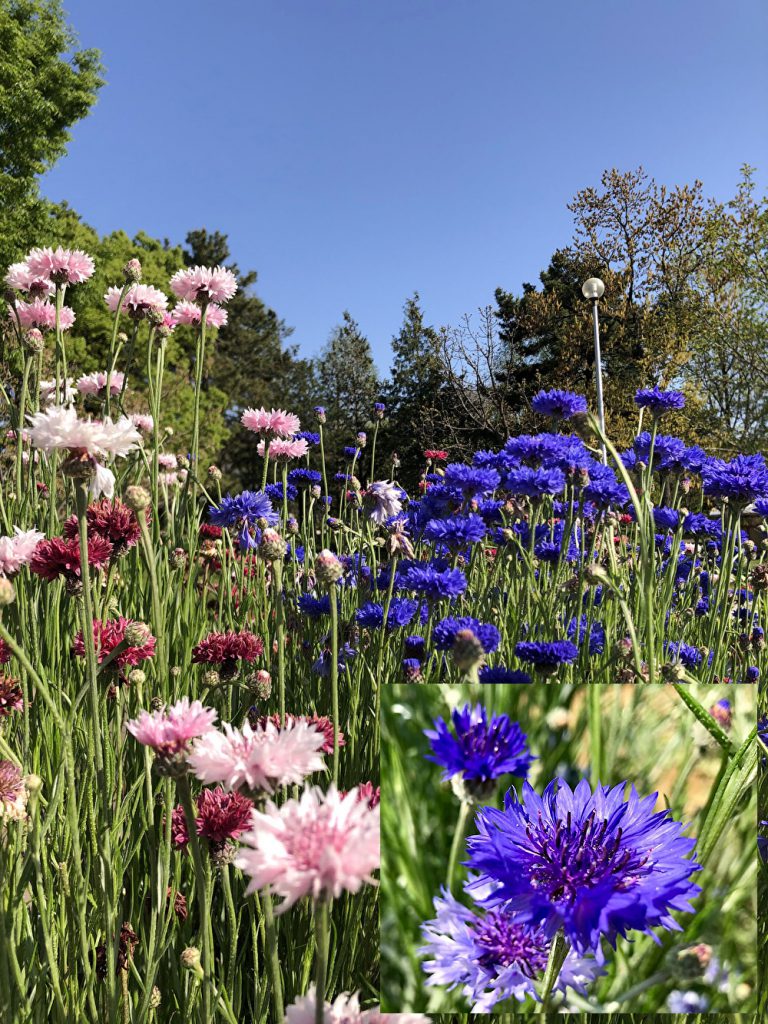
Yaguruma-giku(the cornflowers) begin to bloom as Tango-no-Sekku(the Boys’ Festival) approaches. At the same time, Koi-nobori(carp streamers) begin to be noticeable. The arrow wheel on the top of Koi-nobori is ringing in the breeze of spring. The cornflower native to Southeastern Europe, which has a strong Mediterranean climate, is called cornflower and was originally a weed that blooms in wheat fields. From the end of April to the beginning of summer, flowers such as blue, purple, peach and white bloom. Among them, the beauty of bluish purple is called cornflower blue, and it is so much that it is referred to the color of the finest sapphire. It is displayed on the casket of King Tutankhamen of Egypt, and Marie Antoinette likes to use it for the pattern of Western tableware, and it seems that its noble beauty has been attracting attention from ancient times.